







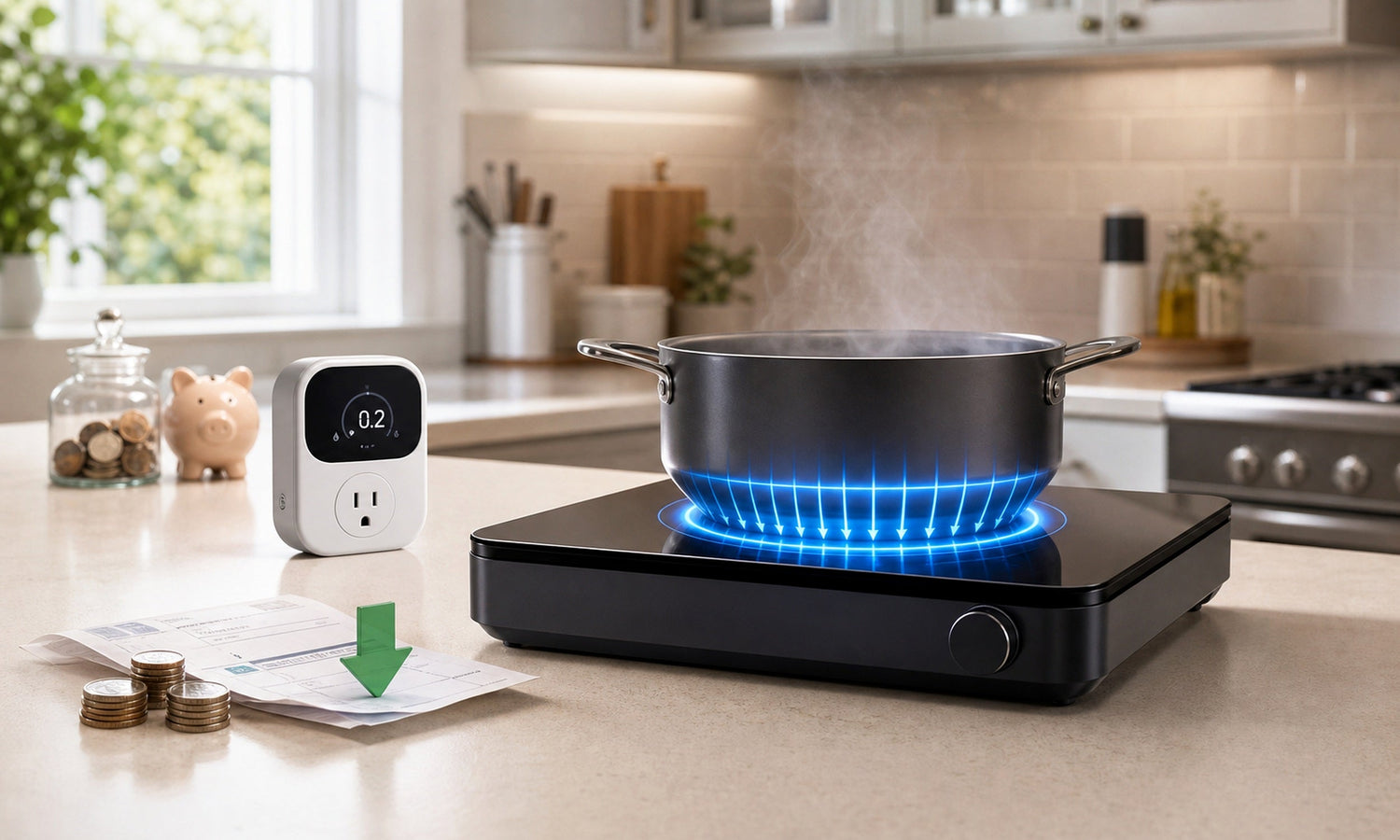
When choosing a new cooktop, many homeowners ask the same question: does induction cooking save money? While induction cooktops often have a higher upfront price than traditional electric or gas stoves, their lower energy waste, faster cooking speed, and better heat control can help reduce long-term household costs.
Unlike traditional cooking methods that heat the surrounding air as well as the cookware, induction technology uses electromagnetic energy to directly heat the pan. This means less wasted energy, shorter cooking times, and potentially lower monthly energy bills.
For American households that cook regularly, the real savings from induction cooking come from more than just electricity usage. Reduced kitchen heat, improved efficiency, and lower cooling costs during hot summer months can also contribute to long-term savings.
Does an Induction Cooktop Save Money?
Yes, an induction cooktop can save money over time, mainly because it uses energy more efficiently than most traditional cooking methods.
Traditional gas and electric stoves lose a significant amount of energy during cooking. Gas burners release heat around the cookware, while electric coil and radiant cooktops must first heat the cooking surface before transferring heat to the pan.
Induction cooking works differently. The electromagnetic field directly heats compatible cookware, allowing more energy to go into cooking instead of being lost into the kitchen.
Yes, an induction cooktop can save money over time, mainly because it uses energy more efficiently than most traditional cooking methods.
Traditional gas and electric stoves lose a significant amount of energy during cooking. Gas burners release heat around the cookware, while electric coil and radiant cooktops must first heat the cooking surface before transferring heat to the pan.
Induction cooking works differently. The electromagnetic field directly heats compatible cookware, allowing more energy to go into cooking instead of being lost into the kitchen.
With energy costs fluctuating and household budgets under scrutiny, homeowners across the U.S. are taking a closer look at their major appliances. While induction cooktops have earned a reputation for sleek designs, lightning-fast boil times, and commercial-grade precision, one major question remains for budget-conscious shoppers: Does induction cooking actually save you money in the long run?
Here is a realistic breakdown of running costs, energy efficiency, and hidden savings to help you determine if switching to induction makes financial sense for your home.
While the upfront purchase price is generally higher than a traditional gas or standard electric coil stove, induction pays for itself through lower running costs and reduced overall home energy usage.
Here is a quick snapshot of how the savings add up for U.S. homeowners:
Lower Energy Bills (90% Efficiency)
Induction transfers about 85–90% of its energy directly into your cookware, compared to just 40% for gas and 70% for standard electric. Less wasted heat means fewer kilowatt-hours used per meal.
Shorter Cook Times
Because induction boils water twice as fast as gas, your appliance runs for significantly less time, directly lowering daily electricity consumption.
Federal & Local Rebates
Under programs like the Inflation Reduction Act (IRA) and local utility incentives, U.S. buyers can qualify for up to $840 in rebates for switching to an induction range—drastically cutting the initial purchase cost.
Is it Cheaper to Cook on Gas or Induction?
When looking strictly at monthly utility bills for the stove alone, natural gas and induction are nearly tied, with gas holding a slight edge in regions with very low gas rates. However, when you factor in overall home energy performance and fixed utility costs, induction is cheaper in the long run.
Here is why: while electricity costs more per unit of energy than natural gas in most of the U.S., induction stoves convert 85% to 90% of their energy directly into heating the food. Gas stoves, by contrast, waste roughly 60% to 70% of their heat into the surrounding kitchen air.
The Numbers: Estimated Annual Cost Breakdown
For an average U.S. household cooking daily (approx. 200–300 hours per year):
| Financial Category | Gas Cooktop | Induction Cooktop | Net Advantage |
| Direct Cooking Energy Cost | ~$30 – $50 / year | ~$35 – $60 / year | Gas (Saves ~$5–$10/yr in raw fuel) |
| A/C Cooling Load Impact (Summer waste heat) | +$20 – $40 / year | +$0 – $10 / year | Induction (Saves ~$20–$30/yr) |
| Fixed Gas Line Base Fee (If going all-electric) | +$180 – $300 / year | $0 / year | Induction (Saves ~$180–$300/yr) |
| Total Estimated Household Impact | $230 – $390 / year | $35 – $70 / year | Induction wins by $195 – $320 / year |
Key Takeaways from the DataDirect
Energy Use
An average U.S. household using an induction cooktop spends roughly $3.00 to $5.00 per month ($35–$60 per year) on electricity to cook. Gas cooktops cost roughly $2.50 to $4.00 per month ($30–$50 per year) in natural gas.
The Gas Connection Trap
If replacing a gas stove allows you to disconnect your home's natural gas line completely (e.g., if you also have an electric heat pump or water heater), you eliminate monthly base delivery charges, saving an immediate $180 to $300 per year regardless of fuel usage.
HVAC & Cooling Savings
Because gas cooktops dump up to 70% of heat into the ambient air, your air conditioner works harder in summer. Switching to induction reduces kitchen thermal waste, saving an estimated $20 to $40 per year on air conditioning.
Bottom Line
In raw fuel usage alone, gas is marginally cheaper or equal in most U.S. states. But when accounting for thermal efficiency, cooling savings, and potential gas-line elimination fees, induction delivers net annual household savings of $200 to $350+ per year.
Related: Gas vs Induction Cooktop
What is the Disadvantage of Induction Cooking?
While induction cooktops offer undeniable energy efficiency, lower operating costs, and remarkable speed, choosing the right appliance requires looking at the full picture. Understanding potential drawbacks is just as important as knowing the benefits—it ensures you pick a cooktop that truly fits your kitchen setup, cooking habits, and budget without any surprises down the road.
It also has some disadvantages that homeowners should consider before purchasing.
1. Higher Upfront Cost
One of the biggest drawbacks is the initial purchase price.
Induction cooktops are often more expensive than basic electric or gas models because they require advanced electromagnetic technology.
However, the higher upfront investment may be balanced by:
Lower energy consumption
Faster cooking performance
Longer-term savings
2. Requires Compatible Cookware
Induction cooking only works with magnetic cookware.
You may need to replace some existing pots and pans if they are made from materials such as:
Aluminum
Copper
Non-magnetic stainless steel
Cookware made from cast iron or magnetic stainless steel usually works well with induction.
Before buying an induction cooktop, homeowners should check their existing cookware compatibility to avoid unexpected costs.
3. Learning Curve for New Users
Induction cooking responds differently compared with gas.
Because heat changes happen quickly, users may need some time to adjust cooking habits, especially when:
Controlling low temperatures
Preventing food from overheating
Adjusting cooking times
However, many users find the precise temperature control easier once they become familiar with the technology.
4. Requires Proper Electrical Installation
Some induction cooktops require a dedicated electrical circuit, especially larger models with multiple cooking zones.
Installation costs may vary depending on the existing kitchen setup.
Homeowners should consider:
- Electrical capacity
- Installation requirements
- Potential upgrade costs
before making a purchase decision.
How to Choose the Right Induction Cooktop?
For homeowners who are considering switching from gas or traditional electric cooking, understanding the key features can help avoid choosing a model that does not fit their needs.
Here are the most important factors to consider when buying an induction cooktop.
1. Consider the Size and Number of Cooking Zones
The first step is choosing the right size.
Induction cooktops are available in different configurations, including:
- 12-inch compact models for small kitchens and apartments
- 24-inch models for limited counter space
- 30-inch models for most American homes
- 36-inch models for large kitchens and frequent cooking
The number of cooking zones also matters.
A two-zone induction cooktop may be enough for couples or small households, while families who prepare multiple dishes at the same time may benefit from four or five cooking zones.
Before purchasing, measure your countertop space and consider how many pots and pans you normally use during meal preparation.
2. Check the Power Level and Cooking Performance
Power output directly affects cooking speed.
A quality induction cooktop should provide enough power for everyday cooking tasks, including:
- Boiling water quickly
- Stir-frying at high heat
- Simmering sauces precisely
- Cooking multiple dishes simultaneously
Look for features such as:
- Booster function for faster heating
- Multiple power levels
- Precise temperature control
- Independent zone adjustment
Higher wattage is not always better. The ideal model should balance strong performance with energy efficiency.
3. Choose a Cooktop With High Energy Efficiency
Since many consumers search for “does induction cooking save money,” energy efficiency is one of the most important buying factors.
A more efficient induction cooktop can help reduce long-term operating costs by:
- Using less electricity during cooking
- Reducing wasted heat
- Shortening cooking time
- Keeping the kitchen cooler
Look for models designed with efficient induction technology and smart power management features.
An energy-efficient induction cooktop can provide better value over its entire lifespan, not just at the time of purchase.
4. Look for Smart Safety Features
Modern induction cooktops include advanced safety functions that make cooking easier and more secure.
Important features include:
Automatic Pan Detection
The cooktop only activates when compatible cookware is placed on the cooking zone.
Child Safety Lock
Prevents accidental operation, making it useful for families with children.
Overheat Protection
Helps prevent excessive temperatures and protects the appliance.
Residual Heat Indicator
Shows when the surface area may still be warm after cooking.
These features improve daily convenience and provide extra peace of mind.
5. Consider Ease of Cleaning and Maintenance
One of the biggest advantages of induction cooking is easy cleaning.
Since the cooking surface remains relatively cool, spills are less likely to burn onto the glass.
When choosing a model, consider:
- Smooth glass ceramic surface
- Easy-to-clean design
- Scratch-resistant materials
- Minimal gaps where food can collect
A well-designed induction cooktop can save time on daily kitchen maintenance.
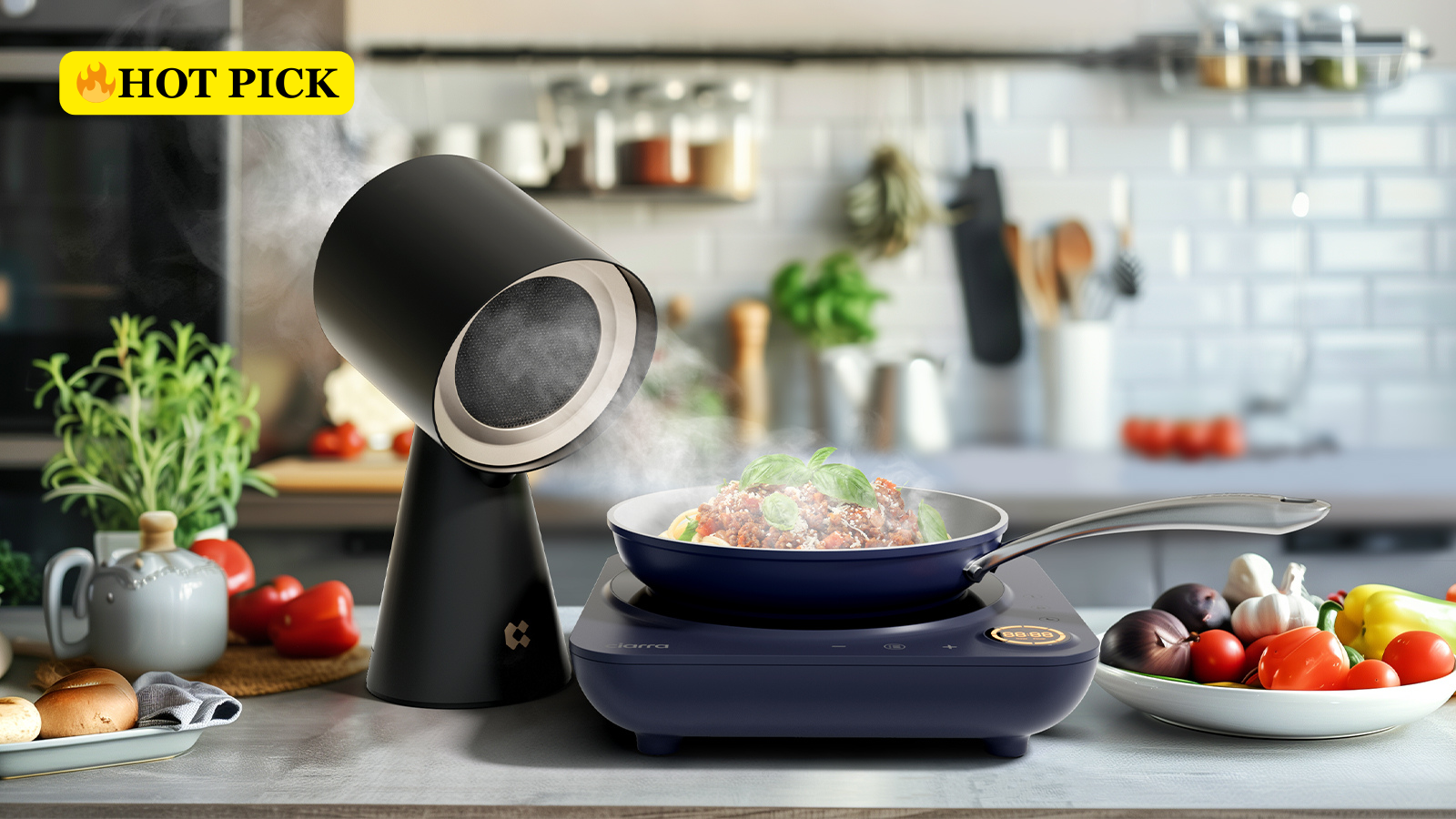
Recommended Portable Induction Cooktop: Gadgets Donut Portable Induction Cooktop
For homeowners looking for an affordable, energy-efficient, and flexible cooking solution, the Gadgets Donut Portable Induction Cooktop is an excellent choice. Designed for everyday cooking, travel, small kitchens, and outdoor use, this compact induction burner delivers powerful performance without taking up much space.

With 8 power levels, a temperature range of 140°F to 460°F, and up to 1500W power in the US, it provides precise control for everything from gentle simmering to high-heat cooking. The built-in 4-hour timer, child safety lock, automatic shut-off, and residual heat indicator also make cooking safer and more convenient.
Thanks to its efficient induction technology, the burner heats only the cookware area, helping to reduce energy waste while cooking up to 50% faster than traditional gas or electric cooktops. The durable glass surface is easy to clean, while its compact plug-in design makes it ideal for apartments, RVs, camping trips, backyard cooking, or as an additional cooking zone at home.
Conclusion: Is Induction Worth the Investment?
Yes, induction cooking saves money over time—especially if you take advantage of local electric rebates.
While the upfront cost is higher than a standard gas or radiant stove, induction pays you back through:
- Lower monthly energy consumption thanks to 90% heating efficiency.
- Shorter cooking times that reduce total power draw.
- Reduced home cooling loads during warm months.
- Long-term appliance reliability and safety.
If you cook frequently, value fast meal preparation, and want to insulate your household against rising natural gas rates, upgrading to an induction cooktop is a smart, energy-efficient financial decision for your modern kitchen.
Related:
- Induction Cooktop Electricity Cost: How Much Does It Really Cost to Cook?
- Best Energy-Efficient Induction Cooktops of 2026
- Do Induction Cooktops Use a Lot of Electricity


Hinterlasse einen Kommentar
Alle Kommentare werden vor der Veröffentlichung geprüft.
Diese Website ist durch hCaptcha geschützt und es gelten die allgemeinen Geschäftsbedingungen und Datenschutzbestimmungen von hCaptcha.