




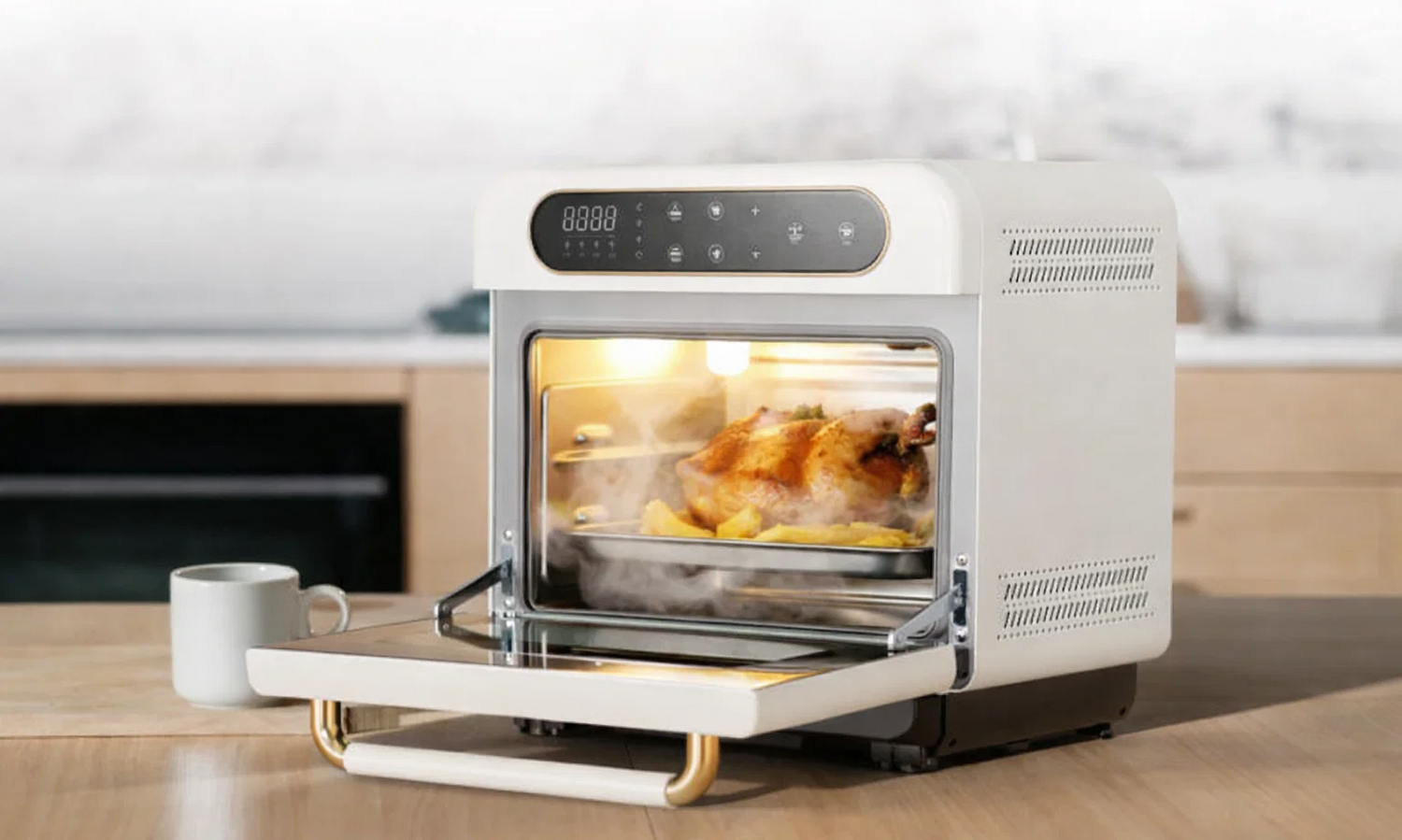
A steam oven is no longer just a luxury appliance found in professional kitchens or high-end European homes. In recent years, steam ovens have gained strong traction among U.S. consumers who are looking for healthier cooking methods, better food texture, and multi-functional kitchen appliances that save time and space.
But what exactly is a steam oven? Is it worth the investment? And what are the real pros and cons? This guide answers the most searched questions about steam ovens and helps you decide whether one belongs in your kitchen.
What are Steam Ovens? How Do Steam Ovens Work?
A steam oven is an oven that cooks food using water vapor, either fully or in combination with traditional convection heat. Unlike a standard oven that relies solely on dry heat, a steam oven injects controlled steam into the cooking chamber, maintaining moisture while heating food evenly.
Modern steam ovens often fall into three categories:
- Full steam ovens (100% steam cooking)
- Combi steam ovens (steam + convection heat)
- Countertop steam ovens (compact, plug-and-play models)
What Are the Best Things to Cook in a Steam Oven?
A steam oven excels at cooking foods that benefit from controlled moisture, gentle heat, and even temperature distribution. For U.S. home cooks, the biggest advantages show up in everyday meals: juicier proteins, better-textured grains, vibrant vegetables, and restaurant-quality seafood. Unlike dry heat, steam helps prevent overcooking, preserves nutrients, and delivers more consistent results—making a steam oven ideal for both healthy cooking and convenience.
In practical terms, a steam oven is perfect for:
- Seafood like crab legs, salmon, and shrimp, which stay tender and sweet instead of rubbery
- Lean meats such as chicken breast, where steam prevents dryness and helps reach safe internal temperatures
- Rice and grains, which cook evenly without boiling over or sticking
- Vegetables, especially root vegetables, that soften beautifully while keeping color and nutrients
Steam Oven Cooking Guide: Time & Temperature
| Food Type | Temp / Mode | Approx. Time | Notes |
|---|---|---|---|
| Crab legs | Full steam, 212°F / 100°C | 8–12 min | Ideal for reheating or gently cooking pre-cooked crab |
| Chicken breast | 356°F / 180°C (steam-blend) | 20–30 min (to 165°F internal) | Juicy, evenly cooked, no dryness |
| Beef steak | Steam first, then sear | Varies (10–15 min steam) | Finish with pan or broiler for crust |
| Rice (white) | High steam | 20–25 min | Even texture, no boiling needed |
| Rice (brown) | High steam | 30–40 min | Better hydration than stovetop |
| Root vegetables (carrots, potatoes, beets) | Steam or steam-blend | 15–25 min | Soft inside, vibrant color |
| Broccoli / green beans | Full steam | 6–10 min | Bright, crisp-tender finish |
| Salmon fillet | Steam or steam-blend at 320°F / 160°C | 10–15 min | Moist, flaky, never overcooked |
| Leftovers (pizza, pasta, rice dishes) | Low steam | 8–15 min | Reheats without drying out |
Are Steam Ovens Really Worth It?
Short answer for most U.S. home cooks: yes, steam ovens are worth it—if you understand how they work and are willing to adjust your cooking habits slightly. Real user experiences show that while steam ovens aren’t perfect, their advantages clearly outweigh their drawbacks for the right households.
Real User Experiences: The Good, the Bad, and the Honest Truth
Common Complaints (And What They Really Mean)
Some users report early frustration with water management, especially when using a steam oven without a built-in water tank:
“Every time I use it, water ends up everywhere. If you don’t buy a steam oven with an integrated water tank, you really need to think carefully about your cooking habits, cleanliness, and where the oven is placed.”
What this tells us:
Steam ovens that rely on external water input or manual filling can feel messy if they’re not used thoughtfully. This isn’t a dealbreaker—but it does mean:
- Built-in water tanks or well-designed reservoirs make a big difference
- Steam ovens reward more organized cooking habits
- Proper placement and ventilation should be planned in advance
Why Most Users End Up Saying “Yes, It’s Worth It”
Once users understand steam cooking, feedback becomes overwhelmingly positive.
1. Faster Cooking with Better Results
Steam transfers heat faster than dry air, which leads to:
- Shorter cooking times
- More even doneness
- Less moisture loss
One experienced user reported cooking:
- A whole turkey in about 1 hour, fully cooked, tender, and juicy
- Frozen raw shrimp in 12 minutes
- Hard-boiled eggs in 20 minutes—perfect texture
2. Reheating Leftovers Is a Game-Changer
This is one of the most consistent praises:
“A steam oven is the best way to reheat food—nothing dries out.”
Leftover pizza, pasta, rice, and roasted meats regain near-fresh texture, something traditional ovens and microwaves struggle to do.
Energy Efficiency & Size: An Underrated Advantage
Many steam ovens have a smaller internal capacity—about 1–2 cubic feet, roughly 20–40% the size of a standard 30-inch oven.
This means:
- Faster preheating
- Lower energy consumption
- Better efficiency for everyday meals
For U.S. households concerned with energy costs and sustainability, this is a strong selling point.
What Steam Ovens Do Exceptionally Well
Users consistently highlight these strengths:
- Vegetables (easy, fast, vibrant)
- Beef and pork roasts (excellent moisture retention)
- Frozen foods (especially pizza—often cooked in the time it takes to preheat a regular oven)
- Pastries and desserts (even delicate items like puff pastry with ice cream)
- Large proteins (turkey, chicken, roasts)
What Steam Ovens Are Not Good For
Even enthusiastic users agree there are a few exceptions:
- Microwave popcorn
- Reheating coffee
- Heating water for tea
These are minor limitations and don’t affect core cooking performance.
So, Are Steam Ovens Worth Buying?
Absolutely—if you’re willing to learn.
“If you’re not willing to learn a new way of cooking (trust me, it’s not hard), don’t waste your money. But if you are, it’s absolutely worth it.”
Steam ovens are worth it if you:
- Cook frequently at home
- Care about food texture and moisture
- Reheat leftovers often
- Want faster, more energy-efficient cooking
- Enjoy experimenting with better cooking results
They may not be worth it if you:
- Rarely cook
- Expect microwave-style simplicity
- Don’t want any learning curve at all
- Final Verdict for U.S. Consumers
Steam ovens are not just a trend—they’re a powerful upgrade for modern kitchens. While price and learning curve can slow adoption, real-world usage proves that once mastered, a steam oven becomes one of the most-used and most-loved appliances in the home.
Are Steam Ovens Energy Efficient?
Yes, steam ovens are generally energy efficient.
Because a steam oven uses hot steam instead of only dry air, heat transfers faster and more evenly. This means shorter cooking times and lower overall energy use compared to traditional ovens. Most steam ovens also have a smaller internal cavity (often 1–2 cubic feet), so they preheat faster and require less electricity to maintain cooking temperatures.
In real-world U.S. household use, steam ovens are especially energy efficient for:
- Daily meals and small portions
- Reheating leftovers (much less energy than a full-size oven)
- Cooking vegetables, fish, and grains that don’t require long bake times
What Are the Disadvantages of a Steam Oven?
While steam ovens offer many benefits, they do have some drawbacks:
- Higher Initial Cost – Steam ovens are generally more expensive than traditional ovens.
- Learning Curve – Cooking with steam requires understanding placement, steam levels, and timing.
- Water Management – Ovens without built-in water tanks can be messy and require regular cleaning or descaling.
- Not Ideal for All Foods – Certain dry-heat recipes, like crispy snacks or dehydrated foods, may not work well.
- Smaller Capacity – Many steam ovens are smaller than standard ovens, limiting the amount of food cooked at once.
Shop the Best Steam Oven
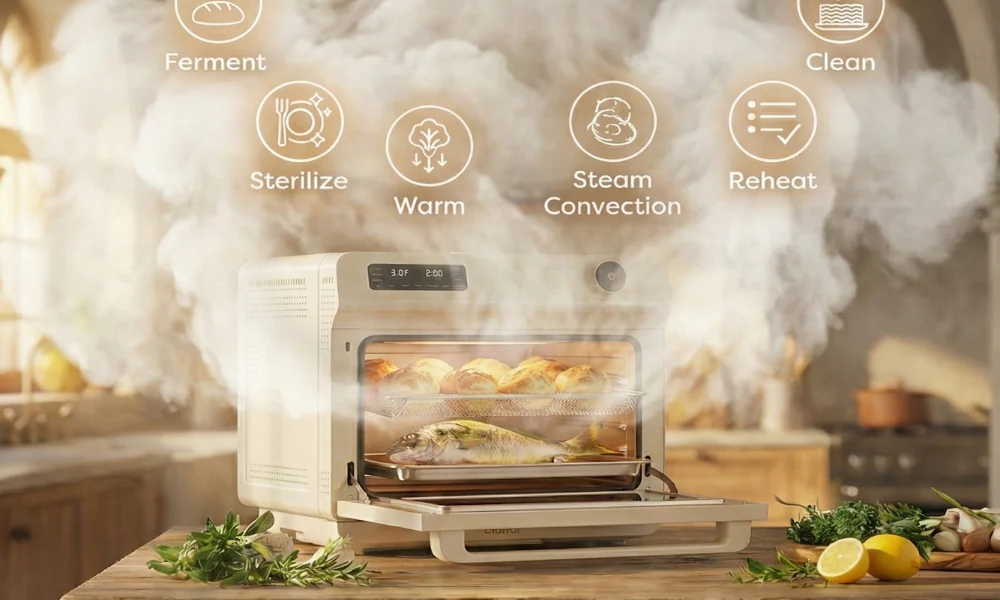
Features 12 smart presets: Steam, Rapid Steam, Steam Convection, Air Fry, Bake, Ferment, Dehydrate, Warm, Clean, Sterilize, Reheat, and Preset.
Replaces multiple kitchen gadgets—perfect for steaming seafood, air-frying crispy fries, baking bread, fermenting dough, or even sterilizing baby bottles.

Ideal for families who want one appliance for almost every cooking need.
- Integrated Water Tank for Hassle-Free Steam Cooking
- Built-in water reservoir eliminates mess and simplifies steam use.
- High-temp, 20-second micro-pressure steam locks in nutrients, freshness, and flavor.
- Makes steaming vegetables, seafood, and proteins faster and cleaner than traditional ovens.
- Spacious 25.4QT Capacity
- Large enough for family meals and gatherings.
Despite its size, it’s still countertop-friendly, making it suitable for smaller kitchens without sacrificing cooking volume.

Precision & Smart Technology
- 360° Turbo Convection: 9-blade fan ensures even heat and crispy results without hot spots.
- Intelligent Dual NTC Control: Adjustable 85°F–450°F for precise temperature control.
- 12-Hour Preset & Fast Heat-Up: Schedule meals ahead of time and enjoy perfectly cooked dishes on demand.
Health, Safety & Easy Maintenance
- Made with food-grade 304 stainless steel, resistant to high temperatures and corrosion.
- Self-cleaning + non-stick interior simplifies maintenance.
- High-temperature steam melts grease, grime, and odors, keeping the oven fresh with minimal effort.
Compact & Space-Saving Design
- Stylish countertop design maximizes kitchen space.
- Combines multiple functions without adding clutter.

Conclusion
In summary, steam ovens have evolved from luxury appliances into practical, versatile tools for modern U.S. kitchens. They deliver healthier, juicier, and more evenly cooked meals, save energy with faster cooking times, and excel at reheating leftovers without drying out food. While they come with a learning curve and a higher upfront cost, the benefits far outweigh the drawbacks for frequent home cooks who value precision, versatility, and convenience.
For those ready to upgrade their kitchen, the Ciarra Gadgets 12-in-1 Convection Steam & Air Fryer Oven is an ideal choice. With a built-in water tank, 25.4QT spacious capacity, 12 smart cooking modes, and precision temperature control, it combines multiple appliances into one, making it perfect for steaming, air frying, baking, fermenting, and more—all in a compact, easy-to-clean design.
Whether you’re cooking vegetables, seafood, proteins, or even pastries, this all-in-one steam oven delivers restaurant-quality results while saving time and counter space.


Zanechať komentár
Všetky komentáre sú pred zverejnením moderované.
Táto lokalita je chránená testom reCAPTCHA a vzťahujú sa na ňu pravidlá ochrany súkromia a podmienky poskytovania služby hCaptcha.