



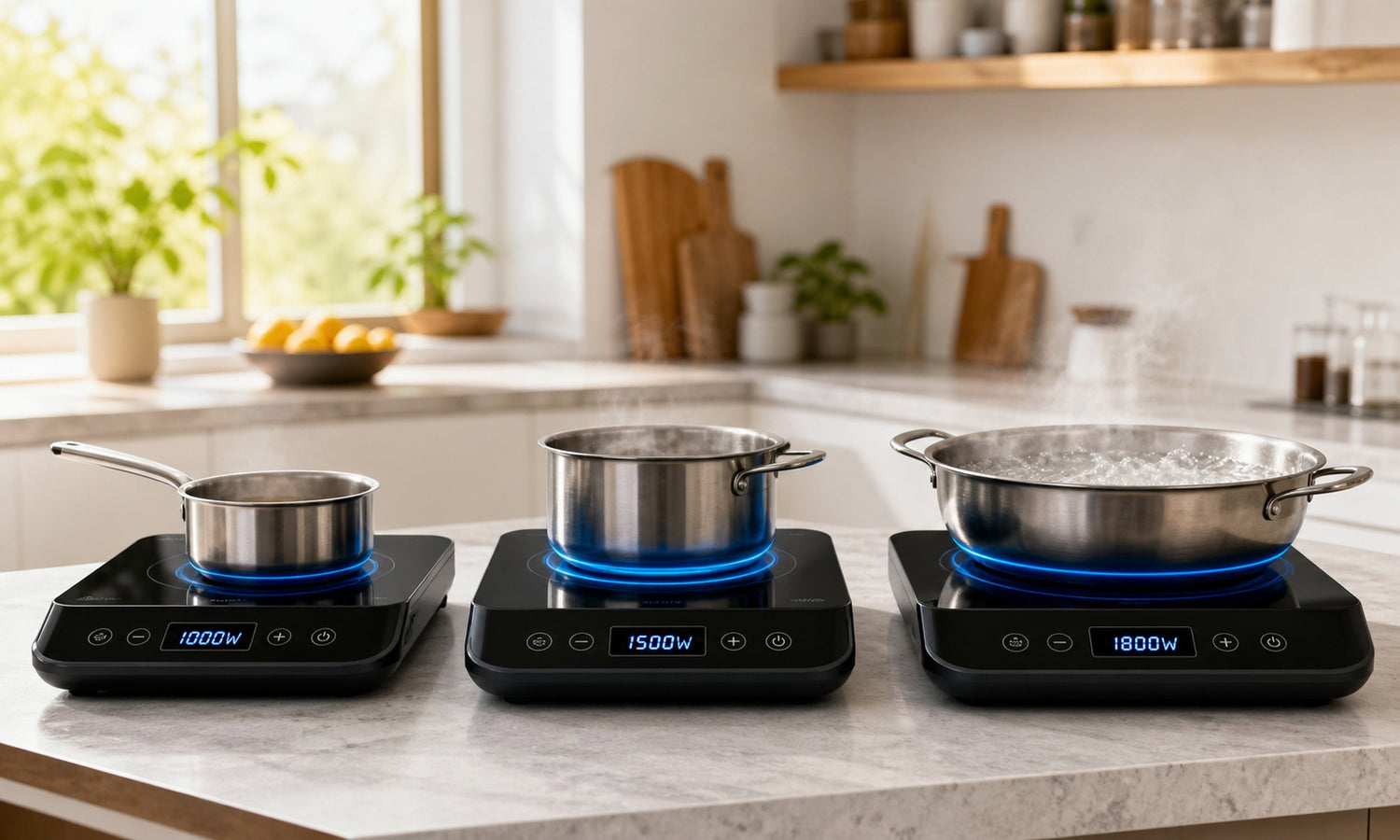
When shopping for a portable single-burner induction cooktop in the United States, your search quickly narrows down to three primary power choices: 1000W, 1500W, and 1800W. While higher wattage promises faster boiling times and intense heat, choosing the right cooktop isn't just about speed—it’s about balancing heating performance against your household's electrical limits, portable power capacity, and everyday cooking habits.
In the US, standard residential wall outlets operate on a 120V system backed by 15-amp circuit breakers. Understanding how each wattage tier interacts with your home or off-grid power setup is the key to avoiding buyer's remorse (and constantly tripped breakers).
A 1000W, 1500W, and 1800W induction cooktop can all be energy-efficient because induction heating transfers energy directly into compatible cookware instead of relying on a hot surface or open flame. The U.S. Department of Energy notes that induction cooking can be up to 10% more efficient than conventional smooth-top electric cooking and up to three times more efficient than gas cooking.
The key difference is how much power each cooktop can deliver at once—and how long it needs to reach the desired cooking temperature. This guide compares 1000W, 1500W, and 1800W induction cooktops to help you understand which wattage offers the best balance between cooking performance and energy savings.
Below is a complete breakdown comparing 1000W vs 1500W vs 1800W induction cooktops across speed, energy draw, circuit safety, and real-world performance.
1000W vs 1500W vs 1800W: What Is the Difference?
Quick Comparison Overview
| Feature / Metric | 1000W Induction Cooktop | 1500W Induction Cooktop | 1800W Induction Cooktop |
| Boil Time (1 Qt Water) | ~8 – 10 minutes | ~4.5 – 6 minutes | ~3 – 4 minutes |
| Amperage Draw (120V) | ~8.3 Amps | ~12.5 Amps | ~15.0 Amps (Max Circuit Load) |
| Max Temperature | ~390°F – 430°F | ~430°F – 460°F | ~460°F – 500°F |
| Breaker Trip Risk | Very Low | Low | Moderate (on shared lines) |
| Solar / Battery Friendly | Excellent (500Wh+ capacity) | Fair (1000Wh+ capacity) | Heavy Draw (2000Wh+ needed) |
| Best Use Case | RVs, Camping, Solar Power | Everyday Meal Prep, Apartments |
Rapid Boiling, High-Heat Searing |
Understanding the Three Wattage Tiers
1. 1000-Watt Induction Cooktops: The Low-Draw Portable Choice
Current Draw: ~8.3 Amps at 120V
Target Audience: RV travelers, campers, dorm students, and off-grid enthusiasts.
A 1000W cooktop is engineered for power efficiency rather than raw speed. Because it draws just over 8 amps, it’s ideal for portable battery power stations, small RV inverters, and older home circuits where drawing high amperage could trigger a safety shutoff.
- Pros: Exceptionally low power draw; works smoothly on off-grid systems; safe on virtually any outlet.
- Cons: Slower boiling speed; struggles to maintain heavy searing temperatures on large cast-iron pans.
2. 1500-Watt Induction Cooktops: The Balanced Household Favorite
Current Draw: ~12.5 Amps at 120V
Target Audience: Apartment dwellers, meal preppers, and everyday home cooks.
1500W models represent the middle ground of portable induction cooking. Drawing around 12.5 amps, a 1500W unit stays safely under the continuous safety limit of standard 15-amp household circuits, allowing you to cook comfortably without worrying about overloading older wiring.
- Pros: Fast heat-up times for routine meals; low risk of blowing breakers; great energy efficiency.
- Cons: Slower than full 1800W units when boiling large stockpots of water.
3. 1800-Watt Induction Cooktops: Maximum Power for Fast Cooking
Current Draw: ~15.0 Amps at 120V
Target Audience: Serious home chefs, high-heat stir-fry enthusiasts, and fast-boil needs.
1800W is the maximum power limit permitted for standard 120V / 15A wall outlets in North America. These burners deliver gas-stove-like performance, bringing water to a rolling boil in minutes and reaching ultra-high temperatures required for wok cooking and steak searing.
- Pros: Blazing-fast boiling speed; highest heat capacity; instant temperature control.
- Cons: Can trip shared 15A kitchen breakers if a toaster or microwave runs on the same line simultaneously; not ideal for small battery power stations.
Cooking Task Comparison: Which Wattage Uses Less Energy?
| Cooking Task | Metric | 1000W Cooktop | 1500W Cooktop | 1800W Cooktop | Winner (Least Energy) |
| Boiling 1 Quart Water | Time | 9 min 00 sec | 5 min 15 sec | 3 min 30 sec |
1800W
|
| (70°F to 212°F) | Energy Used | 150 Wh | 131 Wh | 105 Wh | (Fast heat reduces loss) |
| Boiling 1 Gallon Water | Time | 32 min 00 sec | 19 min 00 sec | 13 min 30 sec |
1800W
|
| (Stockpot / Pasta) | Energy Used | 533 Wh | 475 Wh | 405 Wh | (Higher efficiency) |
| Simmering Sauce (15 Min) | Time | 15 min 00 sec | 15 min 00 sec | 15 min 00 sec |
1000W
|
| (Low heat output) | Energy Used | 75 Wh | 110 Wh | 135 Wh | (Lower idle draw) |
| Searing 2 Steaks | Time | 10 min 00 sec | 7 min 00 sec | 5 min 00 sec |
1800W
|
| (Preheat + Cook) | Energy Used | 166 Wh | 175 Wh | 150 Wh | (Faster pan recovery) |
High-Heat & Boiling Tasks: 1800W uses up to 30% less total kWh than 1000W because induction transfers heat to the pan instantly, minimizing ambient heat dissipation over long periods.
Low & Slow Tasks: 1000W consumes roughly 44% less power during low-temperature simmering due to lower baseline duty-cycle power draw.
How Much Electricity Does Each Wattage Use?
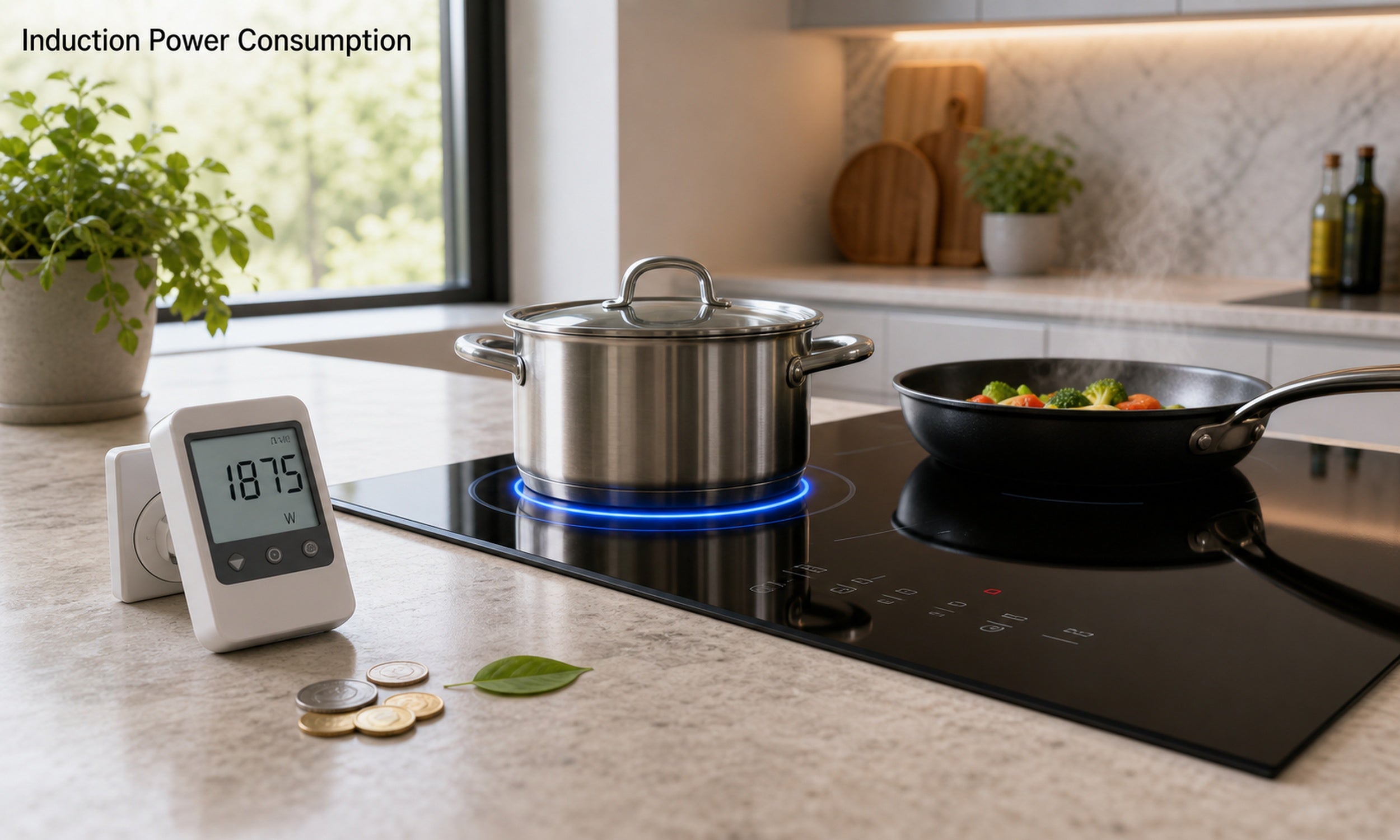
When operated at maximum power on standard US 120V circuits,
a 1000W cooktop uses 1.0 kWh of electricity per hour (drawing ~8.3 amps),
a 1500W cooktop uses 1.5 kWh per hour (drawing ~12.5 amps),
and an 1800W cooktop uses 1.8 kWh per hour (drawing ~15.0 amps).
Assuming the average US electricity rate of $0.16 per kWh, running these units continuously at top power costs roughly $0.16, $0.24, and $0.29 per hour, respectively.
Does a 1000W Induction Cooktop Save More Energy?
No, a 1000W induction cooktop does not save more energy for most tasks.
Because heat transfer is less intense, a 1000W cooktop takes roughly twice as long to bring water to a boil or heat a pan compared to an 1800W unit. This extended run time leads to greater ambient heat loss, resulting in higher total energy consumption (Wh) for boiling and high-heat cooking.
A 1000W cooktop only saves energy during prolonged, low-temperature tasks like simmering sauces, where heat loss isn't a factor and lower baseline power draw matters more.
Is 1500W the Best Wattage for Energy Efficiency?
No, 1500W is not the most energy-efficient wattage for all tasks—it is a middle-ground compromise. For high-heat tasks like boiling water or searing, 1800W is actually more energy-efficient because its faster heating time minimizes heat loss to the surrounding air, requiring fewer total watt-hours (Wh) to finish the job.
Conversely, for low-heat tasks like simmering, 1000W consumes the least power because of its lower baseline draw. A 1500W cooktop isn't the single most energy-efficient option, but rather the most practical balance for US homes: it offers speed close to 1800W while lowering the risk of tripping standard 15-amp household circuit breakers.
The Biggest Factors That Affect Induction Cooktop Energy Use
The primary factor determining total energy use isn't just the burner's wattage rating—it is cooking time and heat loss.
Higher wattage units (like 1800W) boil water and sear food much faster, spending less total time radiating heat into the surrounding room, which often consumes fewer total watt-hours than a 1000W unit running for twice as long.
Cooking Task & Temperature Level: High-heat boiling favors high wattage (1800W) for maximum efficiency, whereas long, low-temperature simmering favors low wattage (1000W) to minimize baseline power draw.
Cookware Material & Base Size: Ferrous metals like heavy cast iron and multi-ply stainless steel maximize magnetic induction transfer efficiency, while undersized or uneven pan bases leak magnetic energy and slow down heating times.
Pan Placement & Surface Contact: Off-center placement or warped pot bottoms disrupt the electromagnetic coupling with the induction coil, forcing the unit to run longer to reach target temperatures.
Volume of Food or Liquid: Heating larger volumes increases overall run time, magnifying the impact of ambient heat loss on total power consumption (kWh).
Household Circuit & Ambient Environment: Standard US 120V / 15A circuits limit continuous draw, and drafty kitchen environments increase thermal loss from the pan surface.
How to Make Any Wattage Induction Cooktop More Energy Efficient
To maximize energy efficiency on any wattage induction cooktop, always use flat-bottomed, high-magnetic cookware like cast iron or multi-ply stainless steel that matches the burner's coil size, place a lid on pots to trap heat and drastically shorten cook times, and match your power settings to the task—using maximum wattage briefly for boiling or searing to minimize ambient heat loss, then dropping to low power for simmering.

Which Wattage Should You Choose?
Choose 1800W if you cook on standard US kitchen counters, want the fastest boiling and searing speeds, and have a dedicated 15A circuit.
Choose 1500W if you live in an older home with shared electrical lines and want rapid heating performance without the risk of tripping your circuit breakers.
Choose 1000W if you need a low-draw unit for an RV, camping, or running off a portable solar generator.
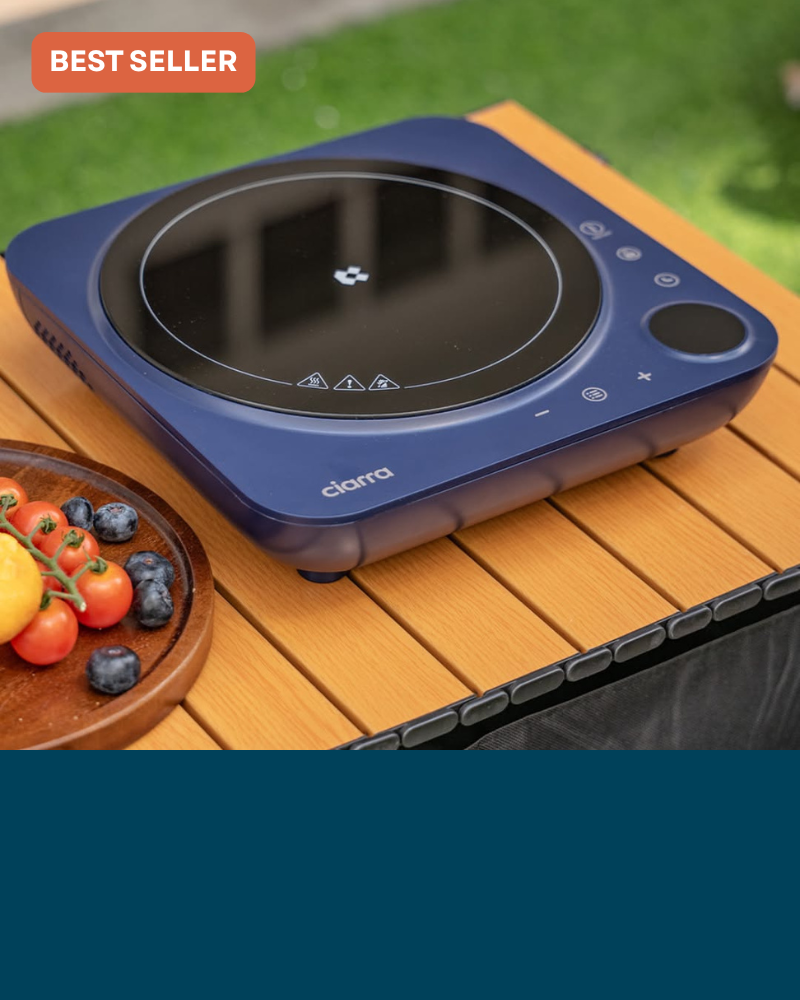
Shop The CIARRA Gadgets 1500W Donut Portable Induction Cooktop
The CIARRA Gadgets Donut Portable Induction Cooktop is engineered to deliver high-performance cooking with maximum energy efficiency. By adapting its power output to regional electrical standards—1500W at 120V / 60Hz in the US, this single-burner cooktop delivers optimal heating speed while protecting household circuits.
Thanks to its 3D dimensional panel and direct electromagnetic transfer, it heats strictly within the pan's diameter, cooking food 50% faster than conventional gas or electric stoves with zero wasted ambient energy.

Key Product Features & Highlights
- Offers 8 power levels and a broad temperature range of 140°F to 460°F, making it versatile enough for everything from low-temperature simmering to high-heat searing.
- 4-Hour Precision Timer & Touch Controls: Adjustable in 1-minute increments (or 10-minute jumps with a long press) up to 240 minutes for worry-free, automated cooking.
- Advanced Safety & Smart Detection: Built-in child safety lock, residual heat indicator, multi-vent rapid cooling dissipation, and 60-second auto-pan detection (compatible with magnetic cookware ranging from 4 to 10 inches / 120–240 mm).
- Quiet & Low-Maintenance: Optimized wind-noise fan design for quiet operation, paired with a scratch-resistant glass cooktop that easily wipes clean with a damp cloth.
- Certified Quality: Fully backed by ETL/FCC certifications and a 12-Month Warranty.

Engineered for maximum energy efficiency, the Donut Cooktop cooks food 50% faster than traditional stoves while targeting heat strictly inside your cookware base to prevent energy waste.
- ✓ 50% Faster Heating: Save time and reduce power usage
- ✓ Zero Thermal Waste: Heats pan directly, keeping room cool
- ✓ Smart Power Tuning: Efficient 1500W (US) / 2000W (EU/UK) performance
You might be interested in:
- Does an Induction Stove Use a Lot of Electricity?
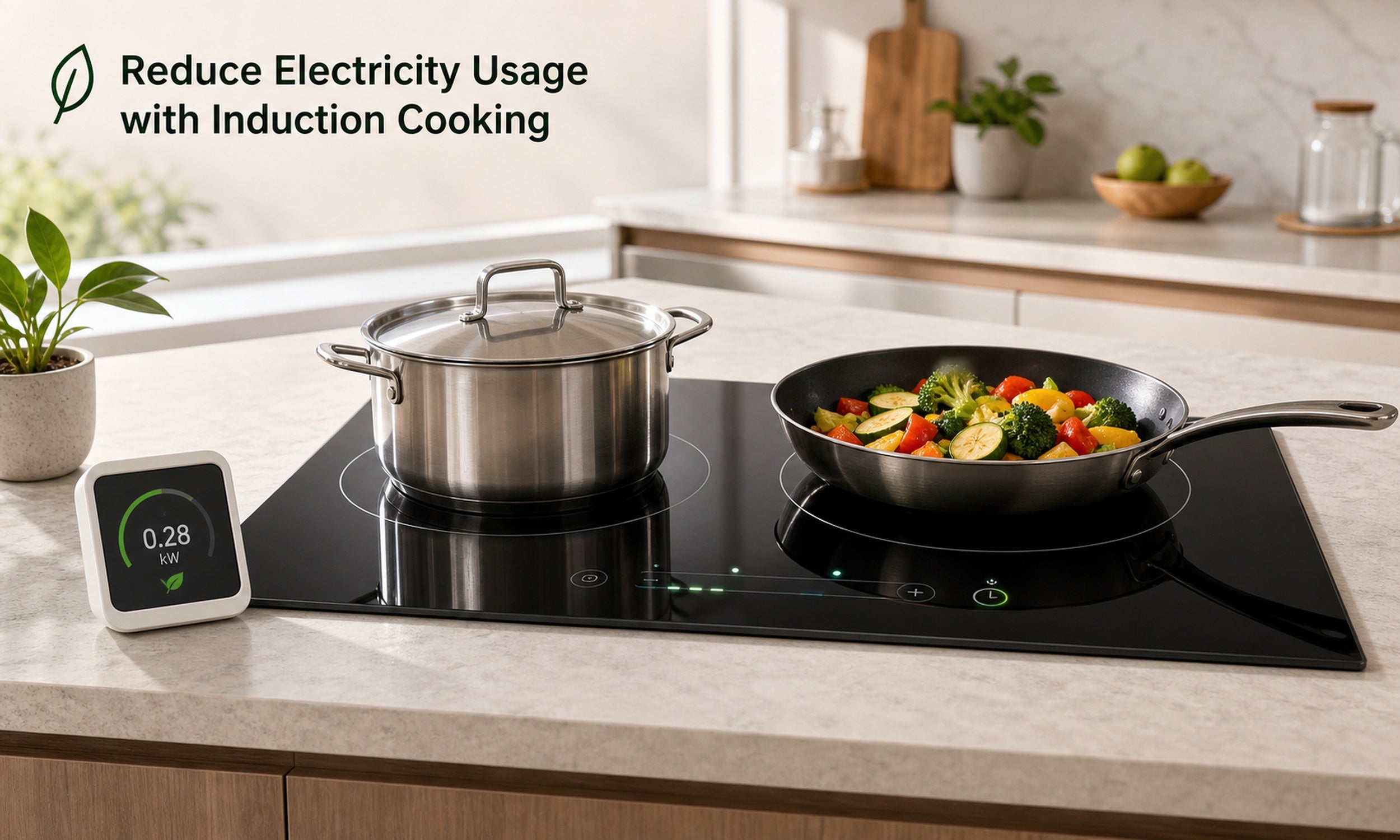
- Practical Ways to Reduce Electricity Usage with Induction Cooking
- Do You Need Special Electrical Wiring for an Induction Stove?
- Do Induction Cooktops Use a Lot of Electricity

Dodaj komentar
Vsi komentarji so pred objavo pregledani.
To spletno mesto ščiti hCaptcha, pri čemer veljajo hCaptcha pravilnik o zasebnosti in pogoji uporabe.