



When it comes to upgrading your kitchen, choosing the right oven is crucial. Two of the most popular options are convection ovens and conventional ovens. While they may look similar, the way they cook food differs significantly, affecting everything from texture to cooking time. Understanding these differences can help you make smarter choices and get the best results for your meals.
What is a Convection Oven?
A convection oven uses a fan and exhaust system to circulate hot air evenly throughout the oven cavity, maintaining optimal cooking temperatures. This airflow removes excess moisture from food surfaces and ensures consistent results, even when cooking on multiple racks. Many convection ovens allow you to turn the fan on or off, giving you the flexibility to use traditional heating when needed.
Convection baking is ideal for recipes that benefit from even heat circulation, such as roasting meat for a crispy exterior, caramelizing vegetables, or baking multiple trays of cookies at once. Some advanced models include an additional heating element to cook food faster and more evenly than conventional ovens.
What Should Not Be Cooked in a Convection Oven?
While convection ovens excel at even cooking and browning, they are not ideal for delicate or moisture-rich foods. Avoid using convection for:
- Delicate desserts: Soufflés, custards, cheesecakes, angel food cakes, and chiffon cakes, as the strong airflow can cause uneven rising, cracking, or collapsing.
- Moist baked goods: Muffins, quick breads, and loose batter cakes may dry out or develop uneven surfaces.
- Saucy or moisture-dependent dishes: Casseroles without lids, stews, or braises can lose too much moisture under circulating air.
- Lean meats or fish: Quick-cooking, low-fat proteins can dry out faster than intended.
- Lightweight ingredients: Items like coconut flakes or breadcrumbs can blow around and scorch.
- Slow-cooked dishes: Tough cuts requiring low, steady heat benefit more from conventional ovens.
For these foods, traditional baking provides the gentle, consistent heat needed to maintain moisture and texture. Convection works best for roasting meats, vegetables, and baking multiple trays of cookies simultaneously, where airflow enhances crispiness and even cooking.
When to Use Convection Baking?
Convection baking is ideal for most cooking and baking needs, including roasting meats, vegetables, casseroles, cookies, and pies. The circulating hot air helps achieve crispy, golden exteriors while keeping the inside tender and juicy, making it perfect for chicken, turkey, or roasted vegetables.
It’s also great for baking cookies or brownies evenly without needing to rotate trays or move racks during cooking. For best results, place baking sheets in the center of multiple racks to take full advantage of the oven’s even heat distribution.
What’s a Conventional Oven?
A conventional oven is a traditional kitchen oven with two heating elements—one at the bottom and one at the top. The bottom element is ideal for roasting large cuts of meat, while the top element is perfect for broiling and browning casseroles. Unlike convection ovens, conventional ovens don’t have a fan to circulate air, so rack placement and occasional rotation are important for even cooking. They are best for delicate baked goods like cakes, custards, and pastries that need a stable, gentle heat.
Convection Oven vs Conventional Oven
| Feature | Convection Oven | Conventional Oven |
|---|---|---|
| Heating Method | Fan and exhaust circulate hot air evenly | Top and bottom heating elements only |
| Air Circulation | Yes – 360° airflow for even cooking | No – heat rises naturally, can be uneven |
| Cooking Speed | Faster – up to 25% quicker | Slower – traditional cooking times |
| Best For | Roasting meats, vegetables, cookies, air frying | Cakes, custards, pastries, delicate baked goods |
| Texture Results | Crispy exterior, evenly browned | Softer, gentle rise for delicate items |
| Rack Flexibility | Can use multiple racks with consistent results | Rack placement affects cooking; may need rotation |
| Temperature Control | Highly precise, can adjust for convection mode | Standard temperature, less precise airflow control |
| Moisture Impact | Can dry out delicate or moisture-rich dishes | Retains moisture better for sensitive recipes |
What is the Temperature Difference Between Convection and Regular Ovens?
For U.S. consumers, the temperature difference between a convection oven and a regular (conventional) oven is typically about 25°F lower for convection cooking. Because the fan circulates hot air evenly, foods cook faster and more uniformly, so recipes often require reducing the oven temperature by 25°F (about 15°C) or shortening the cooking time compared to a conventional oven.
Is There a Benefit to Using a Convection Oven vs. a Traditional Oven?
Using a convection oven offers several advantages over a traditional oven. The circulating fan allows for faster, more even cooking, making it ideal for roasting meats with crispy skin, caramelizing vegetables, baking artisan breads, or cooking multiple trays of cookies at once.
It also provides flexibility, as most convection ovens can be used in regular bake mode when gentle, moisture-rich cooking is needed. This makes convection ovens a versatile choice for home cooks who want crispy, evenly browned results and more precise control over a variety of recipes.
However, delicate or moisture-rich dishes like cupcakes, quickbreads, or wet muffin batters are still better in a conventional oven setting without the fan, as the airflow can dry them out or affect rising.
Why Choose the Ciarra Gadgets 12-in-1 Convection Steam Oven?
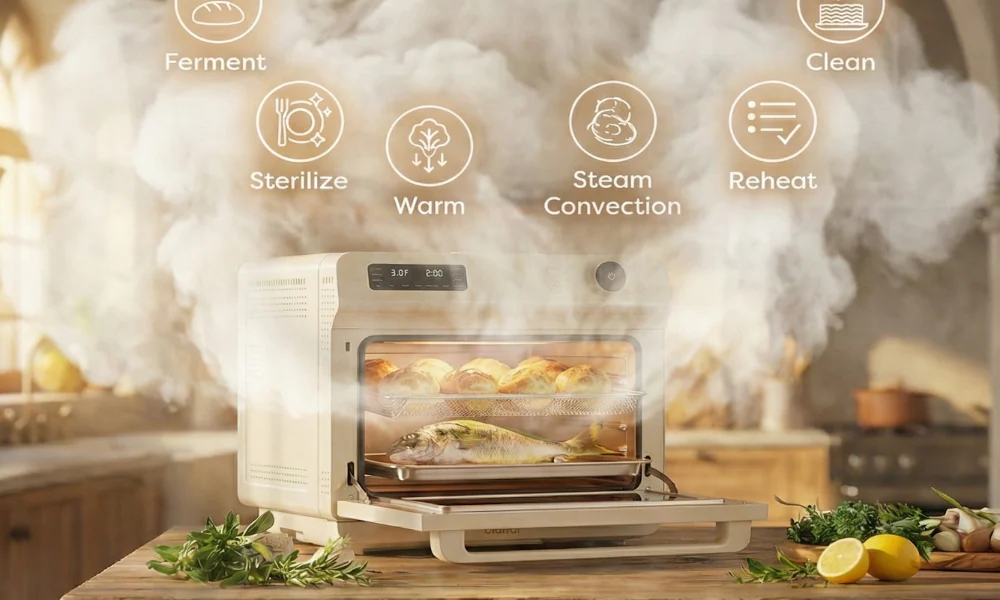
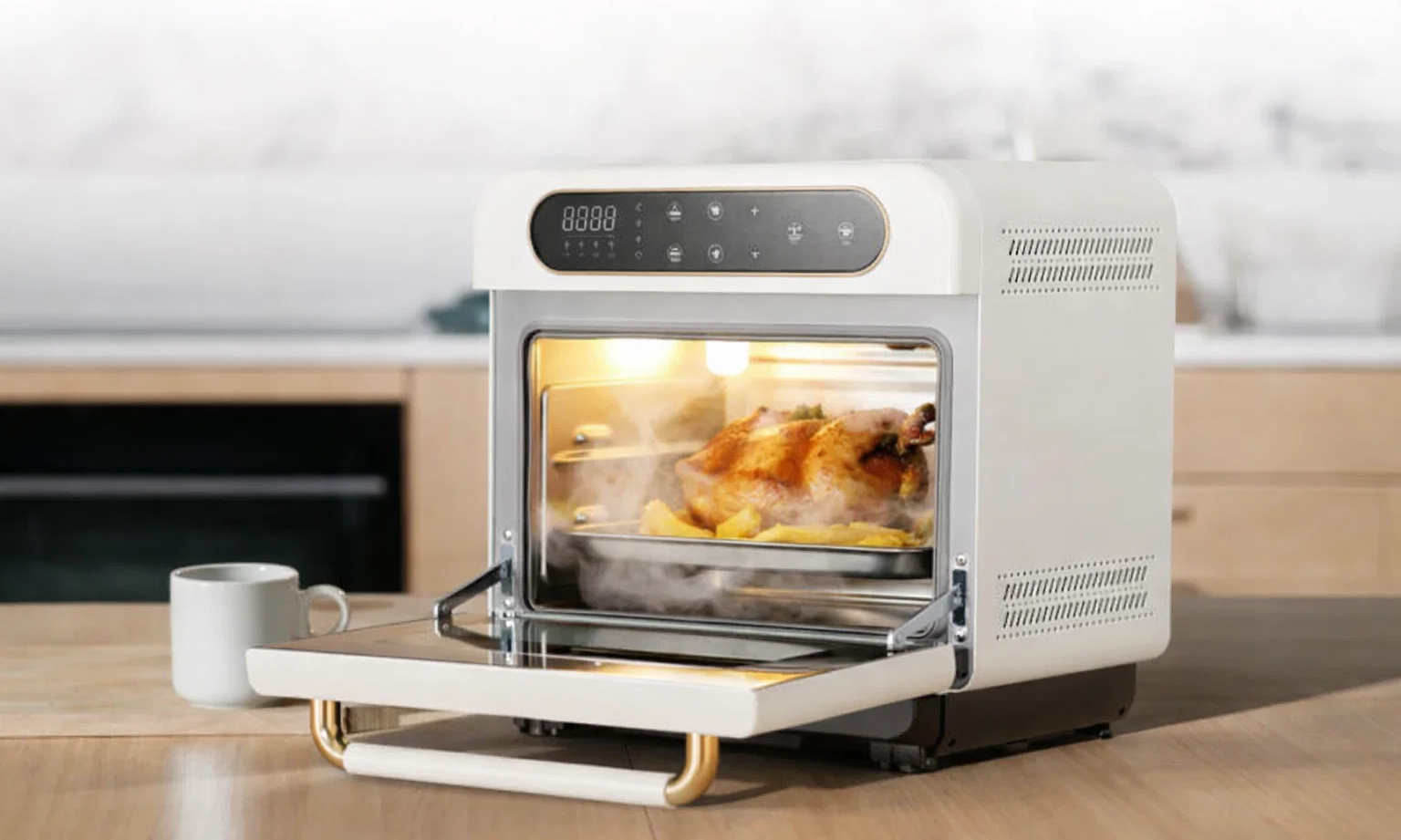
This countertop oven is a true convection oven combined with steam and air fryer technology, designed to simplify everyday cooking while delivering professional-level results. Its biggest advantage lies in how convection heat and steam work together—hot air circulates evenly for crisp textures, while steam locks in moisture, nutrients, and flavor.

Key Advantages & Selling Points
1. True Convection + Steam Cooking
The 360° turbo convection fan circulates hot air evenly throughout the oven, eliminating hot spots and reducing cooking time. When paired with steam, foods stay juicy inside and perfectly browned outside—something traditional ovens struggle to achieve.
2. 12-in-1 Versatility (One Appliance, Endless Meals)
With presets for Steam, Steam Convection, Air Fry, Bake, Ferment, Dehydrate, Reheat, and more, this oven replaces multiple kitchen appliances. It’s ideal for modern kitchens where space and efficiency matter.
3. Precision Cooking Made Easy
Thanks to intelligent dual temperature control (85°F–450°F), even beginners can achieve consistent results—no guessing, no overcooking.
4. Family-Sized but Counter-Friendly
The 25.4QT capacity easily handles family meals like a whole chicken or multiple trays of sides, yet its compact footprint fits comfortably on the counter.
5. Healthier & Low-Maintenance Design
Food-grade 304 stainless steel, non-stick surfaces, and a self-clean steam function make it safer, healthier, and incredibly easy to clean.
Best Cooking Methods to Try
Because this is a convection steam oven, many dishes become simpler and better:
Steam Convection Chicken or Turkey
Crispy skin on the outside, juicy meat inside—no basting required.
Air Fryer Vegetables & Fries
Even browning, less oil, and restaurant-style crispness.
Steam Fish & Seafood
Gentle heat keeps fish tender and flavorful without drying out.
Artisan Bread & Rolls
Steam creates excellent oven spring and a golden, crackly crust.
Reheat Leftovers
Steam prevents food from drying out—meals taste freshly made.
You might be interested in:
Final Takeaway
The Ciarra Gadgets 12-in-1 Convection Steam Oven stands out because it combines true convection airflow, powerful steam, and smart automation in one compact appliance. It cooks faster, more evenly, and more healthfully than a traditional oven—while giving users the flexibility to roast, steam, air fry, bake, and reheat with confidence.
For busy U.S. households looking to save space without sacrificing performance, this convection steam oven is a smart, all-in-one kitchen upgrade.
FAQs
Is 350 Convection the Same As 350 Bake?
No. 350°F convection is not the same as 350°F bake. In a convection oven, the fan circulates hot air, making food cook faster and more evenly. As a result, 350°F convection is effectively hotter than 350°F in a traditional bake setting.
What is the Equivalent of 350 in a Convection Oven?
For most recipes, 350°F bake equals about 325°F in a convection oven. The general rule is to reduce the temperature by 25°F or shorten the cooking time when using convection.
Should I Lower the Temperature When Using a Convection Oven?
Yes. Most recipes recommend lowering the temperature by 25°F when switching from conventional bake to convection.
Does Convection Cooking Reduce Cooking Time?
Yes. Convection ovens typically cook 20–25% faster due to constant hot air circulation.
When Should I Use Convection Instead of Regular Bake?
Use convection for roasting meats, vegetables, cookies, pizzas, and casseroles, especially when cooking on multiple racks.
Is Convection Better for Multi-rack Baking?
Yes. Convection ovens provide more even results across multiple racks without needing to rotate pans.
Does Convection Make Food Crispier?
Yes. The moving air removes surface moisture, helping foods develop a crisp, golden exterior.


Leave a comment
All comments are moderated before being published.
Ezt a webhelyet a hCaptcha rendszer védi, és a hCaptcha adatvédelmi szabályzata, valamint szolgáltatási feltételei vonatkoznak rá.