







Cold-pressed juice has become a staple in modern healthy lifestyles—and for good reason. From better nutrient retention to cleaner, fresher taste, more people are switching to cold press juicers to upgrade their daily nutrition.
If you're wondering whether it’s actually worth it, how it works, and whether you should drink it every day, this guide breaks it all down in a clear, practical way.
What is a Cold Press Juicer?
A cold press juicer, also known as a masticating or slow juicer, extracts juice by crushing and pressing fruits and vegetables rather than spinning them at high speeds.
Unlike traditional centrifugal juicers, cold press juicers operate at low RPMs, which means:
- Less heat buildup
- Minimal oxidation
- Higher juice yield
Better preservation of vitamins and enzymes
This process results in juice that’s richer in nutrients and can typically last longer in the fridge without degrading.
Centrifugal Juicer vs Cold Press Juicer
A centrifugal juicer uses high-speed spinning blades to quickly extract juice, making it fast, affordable, and easy to clean, but it generates more heat and oxidation, which can reduce nutrient quality and juice freshness.
A cold press juicer uses a slow crushing and pressing method, producing higher-quality juice with better nutrient retention, less foam, and higher yield, but it takes more time, costs more, and requires more cleaning effort.
| Feature | Centrifugal Juicer | Cold Press Juicer (Masticating) |
|---|---|---|
| How It Works | Uses high-speed spinning blades to shred and extract juice | Uses slow crushing and pressing to extract juice |
| Speed | Very fast (juice in seconds) | Slower process |
| Nutrient Retention | Lower due to heat and oxidation | Higher due to minimal heat and oxidation |
| Juice Yield | Lower yield, wetter pulp | Higher yield, drier pulp |
| Juice Quality | More foam, separates quickly | Smoother, richer, longer-lasting juice |
| Best For Ingredients | Hard fruits & vegetables (apples, carrots) | All produce, especially leafy greens and soft fruits |
| Noise Level | Loud (similar to a blender) | Quiet operation |
| Ease of Cleaning | Easier, fewer parts | More parts, takes longer to clean |
| Price Range | More affordable ($50–$150) | More expensive ($150–$500+) |
| Shelf Life of Juice | Short (best consumed immediately) | Longer (can last up to 48–72 hours refrigerated) |
| Who It’s Best For | Beginners, budget users, quick juicing | Health-focused users, frequent juicers, premium experience |
Related: Juicer vs Blender
Health Benefits of Cold-Pressed Juices
1. Higher Nutrient Retention
Cold-pressed juice retains more vitamins, minerals, and enzymes compared to traditional juicing methods. Because there’s less heat and oxidation, nutrients like vitamin C and antioxidants stay intact.
2. Easier Nutrient Absorption
Juicing removes most of the fiber, allowing your body to absorb nutrients quickly. This is especially helpful if you’re trying to boost your intake of greens like kale, spinach, or celery.
3. Supports Detox and Hydration
Cold-pressed juices are often rich in water content and plant compounds, which can help support hydration and natural detoxification processes in the body.
4. Encourages More Fruit & Veg Intake
Let’s be real—most people don’t eat enough vegetables. Juicing makes it easier (and tastier) to consume a wider variety in one serving.
5. Better Taste and Freshness
Because of the gentle extraction process, cold-pressed juice tends to taste fresher, smoother, and less frothy than juice from high-speed machines.
Is Cold-Pressed Juice Good for You
Short answer: Yes—with a few caveats.
Using a cold press juicer is one of the healthiest ways to prepare juice because it preserves nutrients and avoids unnecessary heat damage. However, the overall health impact depends on what you put into your juice.
Healthy habits include:
- Prioritizing vegetables over fruits
- Limiting high-sugar ingredients like apples and oranges
- Avoiding added sugars
A green juice with spinach, cucumber, celery, and lemon? Great.
A juice loaded with fruit? Tasty—but closer to a sugar drink.
What is the 80/20 Rule in Juicing?
The 80/20 rule in juicing is a simple guideline to keep your juice balanced and healthy:
- 80% vegetables (low sugar, nutrient-dense)
- 20% fruits (for natural sweetness and flavor)
This ratio helps:
- Reduce sugar intake
- Maintain stable energy levels
- Maximize nutrient density
- A typical 80/20 juice might include:
- Kale, cucumber, celery (80%)
- Apple or pineapple (20%)
It’s a small tweak that makes a big difference—especially if you’re juicing regularly.
Is it Good to Drink Cold-pressed Juice daily?
Yes, drinking cold-pressed juice daily can be healthy if you follow the 80/20 rule—meaning roughly 80% vegetables and 20% fruits in your juice. This keeps sugar levels low, maximizes nutrient intake, and allows you to enjoy daily juice as a nutritious supplement without negatively impacting your overall diet.
However, juices with mostly fruit or added sugars can spike blood sugar and reduce health benefits, so daily consumption of those is not recommended. Stick to mostly vegetable-based cold-pressed juices for the healthiest routine.
Best Cold-pressed Juice Machine
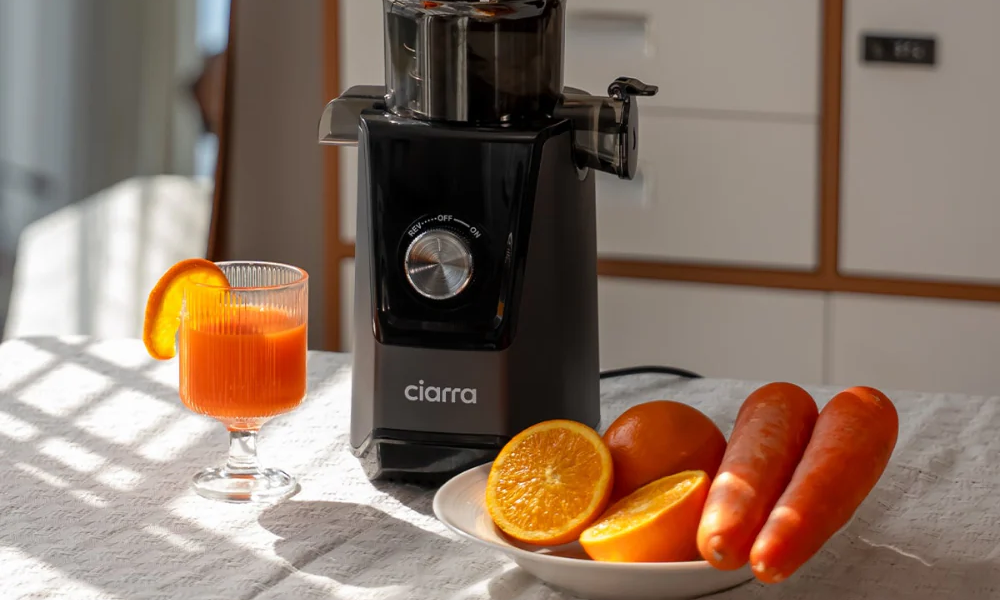
The Ciarra High Yield Cold Press Juicer is the ultimate slow juicer for anyone serious about nutrition, flavor, and convenience. Featuring a 4.3-inch wide feed chute, it effortlessly handles whole fruits and vegetables—no pre-cutting required—saving you time in the kitchen.

With patented slow masticating technology, this 200W juicer gently crushes and presses produce, extracting up to 30% more juice while preserving vitamins, enzymes, and natural freshness.
Leafy greens like kale, spinach, and celery are no problem, and its anti-blocking reverse function clears any clogs instantly, so you can juice without interruptions.
 |
 |
Safety and ease are built-in: the auto-stop smart lock ensures the motor stops immediately if the lid opens, while the drip-free spout keeps counters clean. Cleanup is a breeze with detachable parts and a dual-sided cleaning brush, making daily juicing effortless.
Compact yet powerful, quiet, and durable, the Ciarra Cold Press Juicer delivers nutrient-packed, smooth juice every time—perfect for green juices, detox blends, baby food, or just enjoying fresh, wholesome drinks with your family. Sip smarter, live better, and make every glass count.
Related: Best Juicer 2025: Influencers' reviews
Cold-press Juice Recipes
 |
1. Green Detox JuiceIngredients:
Benefits:
|
 |
2. Carrot-Ginger Immunity BoosterIngredients:
Benefits:
|
 |
3. Berry Antioxidant BlastIngredients:
Benefits:
|
You might be interested in:
FAQs
Are Cold-Pressed Juices Healthy?
Yes, cold-pressed juices are generally very healthy. Because they use slow, low-heat extraction, they retain more vitamins, minerals, and enzymes than traditional juicers. They are especially nutrient-rich when made with mostly vegetables and a small amount of fruit (following the 80/20 rule). However, juices high in fruit or added sugars can spike blood sugar, so moderation is key.
How Long Does Cold-Pressed Juice Last?
Freshly made cold-pressed juice is best consumed within 24–48 hours when stored in a sealed glass container in the refrigerator. Minimal oxidation during cold-pressing allows it to last longer than regular juice, but nutrient levels and taste gradually decline over time. For maximum benefits, drink it as soon as possible.
How to Make a Cold-Pressed Juice?
- Wash all fruits and vegetables thoroughly.
- Chop large produce slightly if needed (most cold-press juicers handle whole fruits/veggies).
- Feed ingredients into the juicer slowly, alternating soft and hard produce for smoother extraction.
- Collect the juice in a clean container, stir, and enjoy immediately or refrigerate for up to 48 hours.
- Clean the juicer promptly to prevent residue buildup and maintain hygiene.
Do Cold-pressed Juices Contain Fiber?
They contain very little fiber because the juicing process removes most pulp. For fiber intake, combine juice with whole fruits and veggies.
Should I Add Sugar or Sweeteners to Cold-pressed Juice?
It’s best to avoid added sugars. Use naturally sweet fruits sparingly (like apples or pineapples) to keep the juice healthy.
What’s the Difference Between Cold-pressed and Regular Juice?
Cold-pressed juice uses slow masticating extraction to preserve nutrients, enzymes, and taste. Traditional centrifugal juicers generate heat and more oxidation, which can reduce nutrient content and juice quality.


Leave a comment
All comments are moderated before being published.
Ezt a webhelyet a hCaptcha rendszer védi, és a hCaptcha adatvédelmi szabályzata, valamint szolgáltatási feltételei vonatkoznak rá.