




If you love cooking indoors—whether it’s sizzling a steak on an electric grill, hosting a tabletop Korean BBQ, or making a cozy hot pot—you’ve likely run into a frustrating problem: heavy smoke, grease splatter, and lingering food odors.
Traditional overhead range hoods are often too far away from your countertop appliances to catch grease and steam effectively. Heavy-duty downdraft systems, on the other hand, require thousands of dollars in kitchen remodeling.
If you are searching for a reliable countertop exhaust hood, you don’t need complex ductwork or expensive installations. A high-efficiency portable countertop range hood gives you targeted suction right where the smoke originates.
What is the Difference Between a Countertop Vent Hood and a Countertop Exhaust Hood?
The short answer is there's very little difference. In the U.S. market, "countertop vent hood" and "countertop exhaust hood" are often used interchangeably to describe a portable ventilation device that sits next to a countertop cooking appliance. However, there is a subtle difference in emphasis.
The term "vent hood" highlights the ventilation function, making it a broader name that may refer to both ducted and recirculating systems.
A countertop exhaust hood performs the same basic job but places greater emphasis on extracting smoke, grease particles, cooking odors, and airborne pollutants from the cooking area.
Consumers searching for "countertop exhaust hood" are typically looking for a solution to problems like:
- Smoke from indoor BBQs
- Grease from electric grills
- Strong hot pot odors
- Steam from portable induction cooktops
- Cooking smells in apartments or small kitchens
The word "exhaust" suggests stronger smoke removal performance, even though many countertop models are recirculating rather than venting outdoors.
For most homeowners, there is no significant functional difference between a countertop vent hood and a countertop exhaust hood. They generally refer to the same type of portable ventilation appliance used with countertop cooking equipment such as induction cooktops, electric grills, hot pots, and tabletop BBQs.
Do Countertop Exhaust Hoods Work?
Yes, countertop exhaust hoods do work, but their effectiveness depends on what you're cooking, how close the hood is to the cooking surface, and the hood's airflow and filtration system.
For many countertop cooking applications—such as portable induction cooktops, electric grills, hot pots, and tabletop BBQs—a quality countertop exhaust hood can significantly reduce smoke, grease, steam, and cooking odors before they spread throughout the room.
How Does a Countertop Exhaust Hood Work?
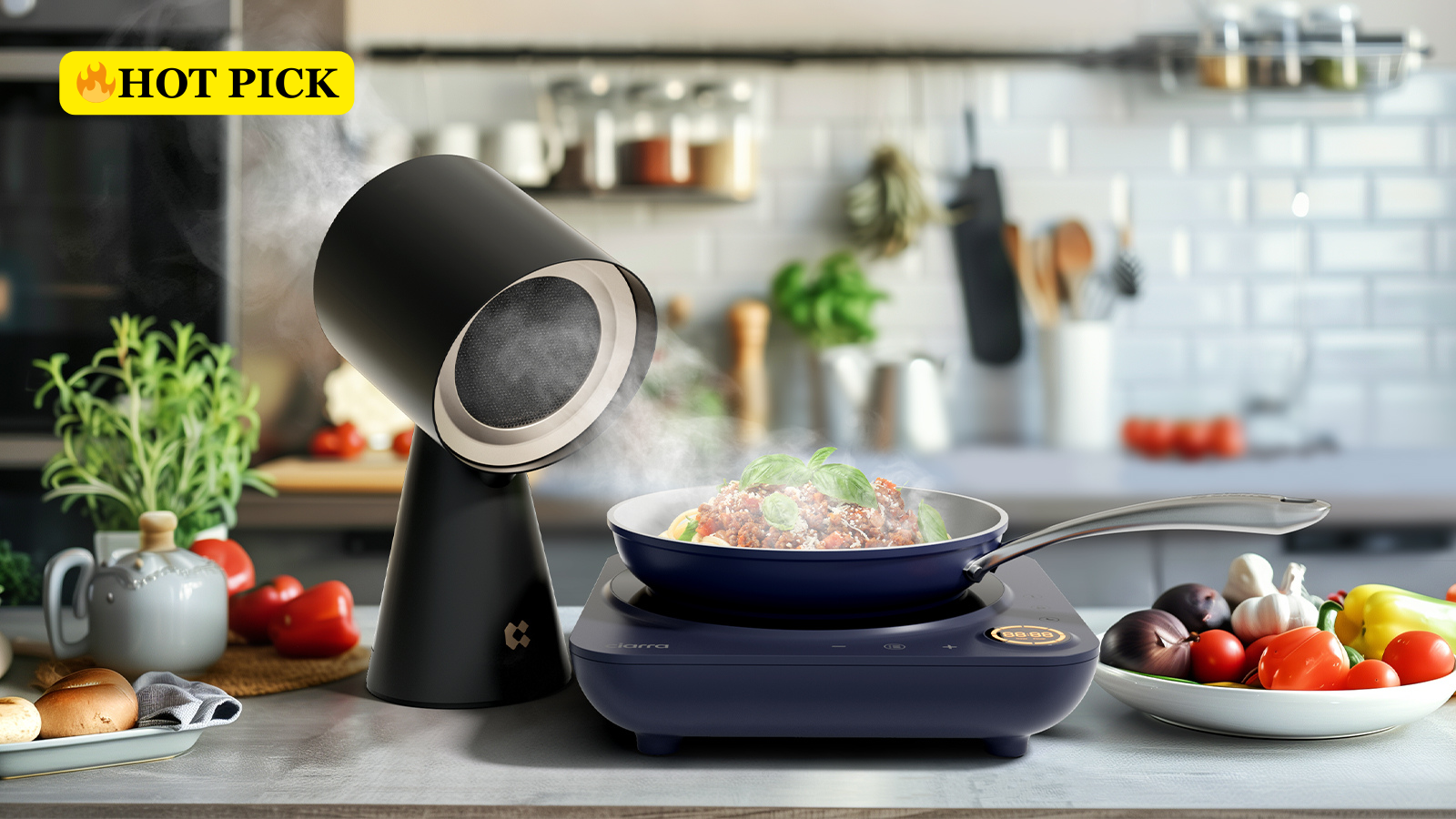
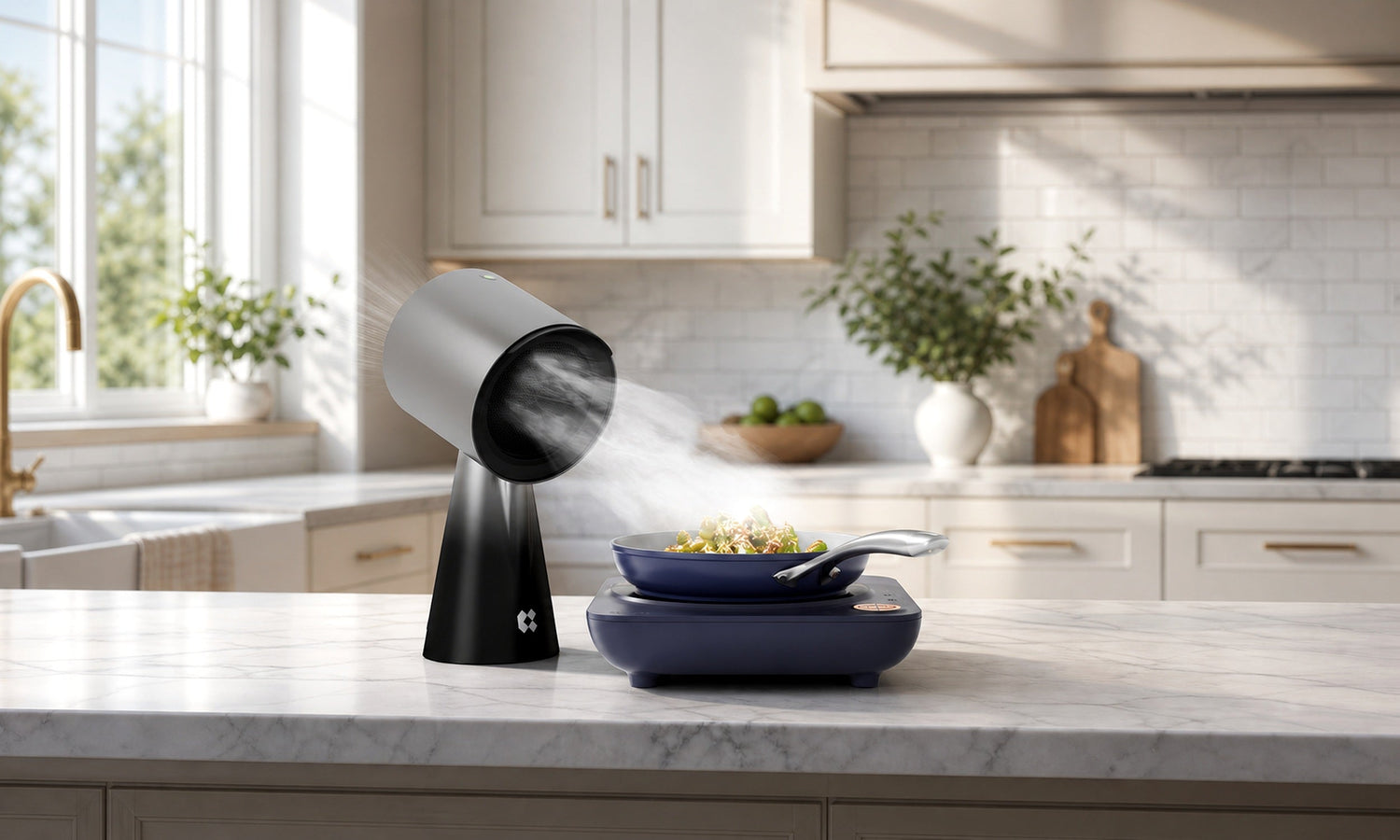
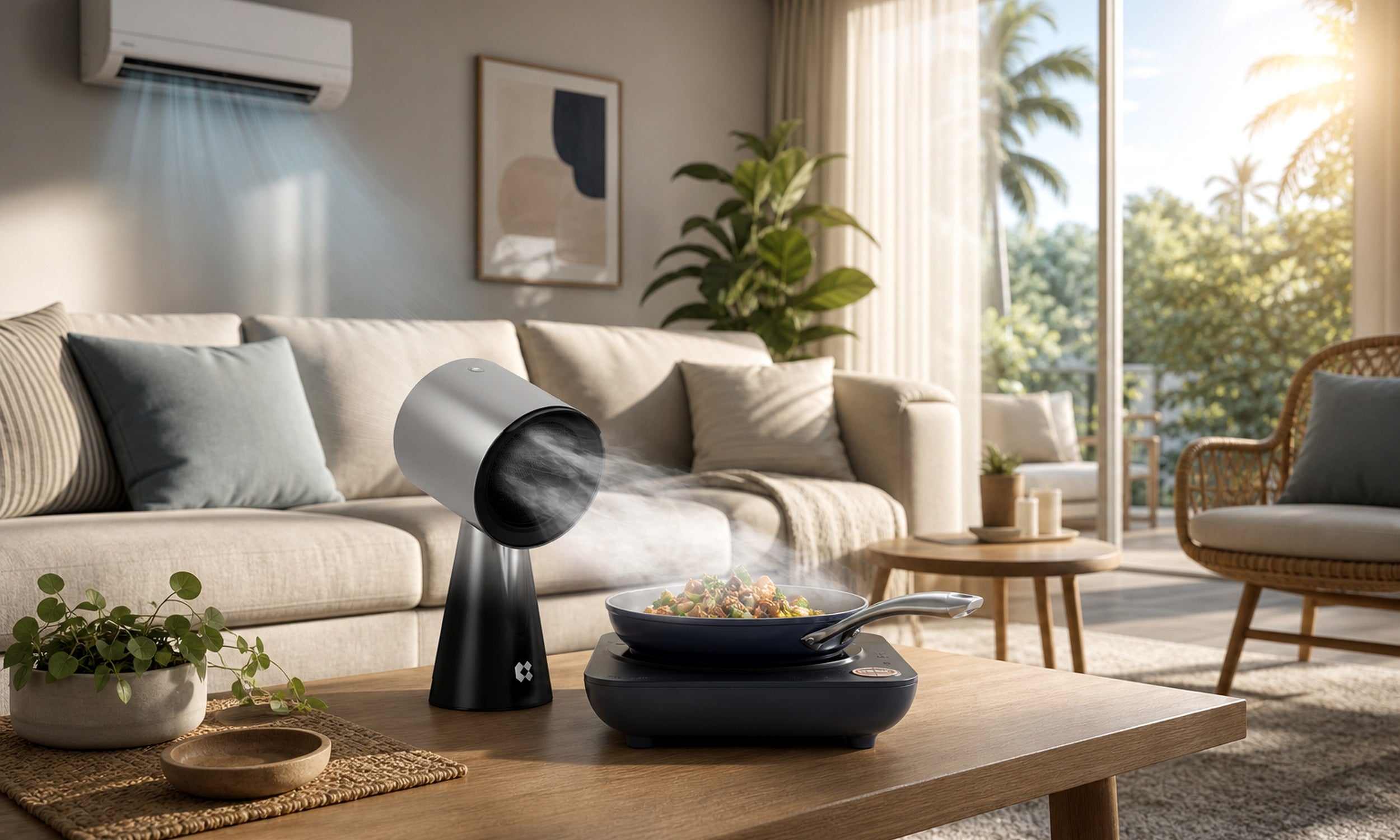
Unlike a traditional ceiling-mounted range hood, a countertop exhaust hood sits right beside your cooking appliance.
Instead of waiting for smoke to rise several feet, it pulls the air sideways at the source, capturing airborne grease and cooking fumes almost immediately. Because it intercepts smoke before it disperses, it can be surprisingly effective for portable cooking setups.
What Can It Remove?
A good countertop exhaust hood can help reduce:
- Smoke from searing meat
- Grease particles
- Cooking odors
- Steam
- Oil mist
Airborne residue that would otherwise settle on countertops and furniture
Many models use a combination of washable grease filters and activated carbon filters to trap grease while helping reduce lingering odors.
What Are Its Limitations?
A countertop exhaust hood isn't designed to replace a high-powered, ducted range hood installed above a permanent stove.
For example, if you're using a large gas range with multiple burners at high heat, a ceiling-mounted ducted hood will generally provide greater airflow and exhaust capacity.
However, for portable cooking appliances, a countertop exhaust hood is often more effective because it's positioned much closer to the source of smoke.
If you are searching for a countertop exhaust hood, you may also be considering other kitchen ventilation options, such as installing a traditional overhead range hood or upgrading to a built-in downdraft ventilation system. These solutions are commonly chosen by homeowners looking for a more permanent way to remove smoke, grease, and cooking odors. However, each option comes with different limitations, especially when cooking with portable appliances or in flexible spaces like kitchen islands, dining areas, and outdoor patios.
Why Overhead Hoods Struggle with Countertop Cooking?
Most home kitchens rely on an overhead range hood or a microwave-vent combo above the stove. While these work well for traditional cooktops, they often fall short when using countertop appliances like electric grills, hot pots, air fryers, or portable induction burners.
Distance: Smoke and vapor disperse into the air before they ever reach an overhead vent.
- Placement Flexibility: Kitchen islands, dining tables, and outdoor patios don’t have overhead ventilation.
- Lingering Odors: Uncaptured grease aerosolizes and settles on furniture, curtains, and cabinets, leaving food smells in your home for days.
A countertop exhaust hood solves this by sitting directly next to your cooking surface, capturing smoke, grease, and fumes at the source before they spread.

Countertop Exhaust Hood vs. Downdraft Ventilation
A countertop exhaust hood and a downdraft ventilation system both help remove smoke, grease, and cooking odors, but they are designed for different needs. A built-in downdraft system offers a more integrated look, but it usually requires a new cooktop installation, countertop modifications, cabinet changes, and professional labor. The equipment itself is also significantly more expensive. In contrast, a countertop exhaust hood provides a more affordable and flexible solution with no renovation required, making it ideal for renters, apartments, kitchen islands, and portable cooking setups.
| Feature | Countertop Exhaust Hood | Built-in Downdraft |
|---|---|---|
| Installation | Plug and play | Professional installation |
| Cost | Affordable | Expensive |
| Portable | Yes | No |
| Cabinet modifications | None | Required |
| Apartment friendly | Yes | Usually No |
| Ideal for tabletop cooking | Excellent | Limited |
| Easy to store | Yes | No |
Key Benefits of a Portable Countertop Exhaust Hood
1. Targeted Suction at the Source
Unlike standard vents that try to pull air from feet away, a tabletop exhaust hood sits inches from your skillet or grill. This localized airflow captures airborne grease, steam, and heavy smoke instantly, protecting your indoor air quality.

2. Plug-and-Play Convenience (Zero Installation)
Installing an under-cabinet or downdraft exhaust hood often requires hiring contractors, cutting into countertops, and rerouting electrical or duct lines. A portable countertop unit requires no installation—simply plug it in, place it on your counter, and hit the power button.
3. Multi-Layered Filtration System
A quality countertop exhaust hood relies on an advanced dual-filtration process:
Grease Filter Mesh: Captures heavy oil droplets and prevents sticky residue from coating your kitchen surfaces.
Activated Carbon Filter: Neutralizes intense odors from garlic, spices, fried food, and fish, leaving your kitchen smelling fresh.
4. Versatile Across Multiple Cooking Scenarios
Whether you live in a high-rise apartment, an RV, or a house with an open-concept kitchen, a portable countertop hood adapts to your lifestyle:
- Tabletop BBQ & Hot Pot: Enjoy social dining without filling the dining room with haze.
- Searing & Frying: Cook high-heat meals on portable induction burners cleanly.
- Small Kitchens & Rentals: Ideal for renters who cannot modify their kitchen fixtures.
How Close Should a Countertop Exhaust Hood Be?
For optimal performance, a countertop exhaust hood should be placed 4 to 10 inches (10 to 25 cm) away from your cooking appliance (such as an electric grill, hot pot, or induction burner), with the intake nozzle angled directly toward the food.
Why Distance Matters:
- Ideal Range (4–10 inches): Captures up to 90%+ of grease, steam, and smoke before they disperse into the room. At this distance, the hood's localized suction effectively pulls in heavy cooking vapors.
- Too Close (under 4 inches): Risks pulling in flare-ups, extreme heat, or liquid splatters, which can damage the filters or intake fan. It also obstructs your view and cooking space.
- Too Far (over 12 inches): Cross-drafts and ambient room airflow will scatter the smoke before the hood can capture it, significantly reducing extraction efficiency.
Pro Tip: Position the exhaust hood slightly elevated and angled down toward the back of your skillet or grill. Since thermal cooking plumes naturally rise and expand, keeping the intake close to the smoke's point of origin delivers the cleanest, smoke-free indoor cooking experience.
Portable countertop exhaust hoods are designed exclusively for electric, induction, or butane/smokeless tabletop appliances. Never use them directly over open flames (such as high-output gas stovetops or open fire burners), as direct flames and extreme heat can melt internal components, damage the filters, or pose a fire hazard
What to Look for When Choosing a Countertop Exhaust Hood
When choosing the best countertop exhaust hood, focus on features that directly improve smoke capture, odor removal, and everyday convenience.
Powerful Airflow & Adjustable Speed Levels
A good countertop exhaust hood should offer multiple fan speeds, allowing you to adjust the airflow based on your cooking needs. Lower speeds are ideal for steam and light cooking, while higher suction levels help capture smoke and grease from grilling, frying, and high-heat cooking.
Multi-Layer Filtration System
Look for a model with effective filtration, including grease filters, activated carbon filters, or advanced odor filtration. These layers help trap oil particles, reduce cooking smells, and keep your kitchen air cleaner.
Low Noise Operation
Since countertop exhaust hoods are often used near dining areas, quiet operation is important. A lower noise level allows you to cook, eat, and have conversations comfortably without being disturbed by a loud fan.
Compact and Portable Design
The best countertop exhaust hood should save valuable counter space while remaining easy to move and store. A compact footprint with a stable base makes it ideal for apartments, kitchen islands, RVs, and flexible cooking spaces.
Easy Filter Maintenance
Choose a model with removable, washable, or replaceable filters. Easy maintenance helps prevent grease buildup, maintains strong airflow, and extends the lifespan of the exhaust hood.
Shop the Best Countertop Exhaust Hood
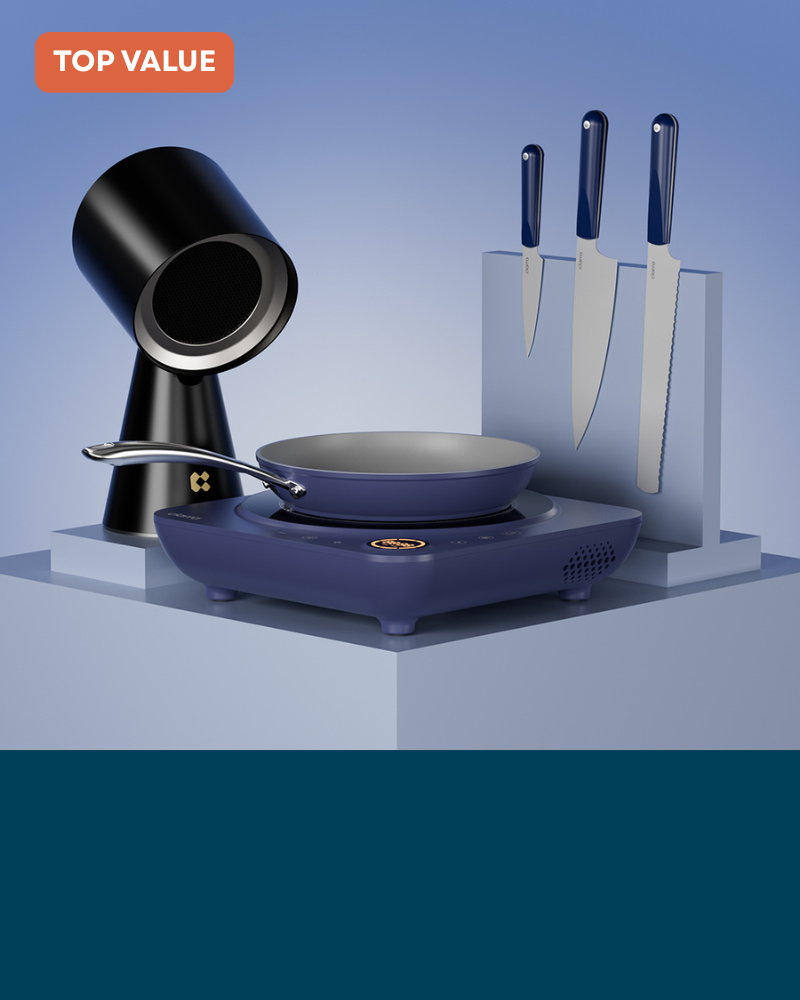
1. Portable Kitchen Air Cleaner (Shadow Noir)- Shop Now
The Easy, One-Button Solution for Everyday Tabletop Cooking
Designed for effortless daily use, this compact countertop exhaust hood delivers reliable grease and odor extraction in a sleek, space-saving footprint. It is the ideal companion for studio apartments, dorm rooms, RV trips, and indoor tabletop grills.

Key Features & Specifications
Triple Filtration Defense: Uses a 3-stage filtration process (Polymer filter for grease separation, Aluminum mesh for heavy particles, and Activated Carbon for odor neutralization) to keep your indoor air fresh.

Smart Airflow & Quiet Performance: Delivers up to 70 CFM of suction with 2 fan speeds, operating quietly at under 6.5 Sones (65 dB) so you can cook and converse comfortably.
Easy Maintenance: Features dishwasher-safe polymer and aluminum filters, a magnetic holder for quick filter changes, and a large-capacity removable oil-collecting cup.
Durable & Anti-Fingerprint: Built with recycled ABS material in a matte sandblasted "Shadow Noir" finish that resists scratches and fingerprints. Just wipe it clean after use.
Plug-and-Play Design: Instant setup with a simple one-button control—perfect for beginners and tight counter spaces.
2. Hood To Go Pro – Portable Kitchen Air Purifier- Shop Now
Upgraded 3-Speed Power with USB-C Portability for Maximum Versatility
For cooking enthusiasts who need extra airflow options and true mobility, the Hood To Go Pro elevates countertop ventilation with an upgraded motor, a USB-C power option, and premium extras right out of the box.

Key Features & Upgrades
3 Adjustable Fan Speeds: Fine-tune your extraction power across 3 speed levels—from quiet simmering to high-heat frying and searing.
USB-C Powered Mobility: Equipped with a detachable USB-C connector. Plug it into a wall outlet or run it off a power bank for true cord-free portability in RVs, outdoors, or on patios.
Bonus Filter Pack Included: Comes with 3 extra Carbon Filters and 1 HEPA Filter right in the box, giving you enhanced fine-particle purification and extended performance.

Advanced Stability & Heat Resistance: Built with a heat-resistant exterior, a nonslip base for countertop stability, and a modern black-to-gray gradient finish.
Effortless Maintenance: Uses the same reliable, magnetic-attachment triple filtration system (Polymer + Aluminum + Carbon) and removable grease cup for quick, hassle-free cleanup.
Is an Exhaust Hood Necessary for a Countertop Oven?
No, an exhaust hood is not strictly necessary for a countertop oven, but it depends on how and what you cook.
When You DO NOT Need One:
Standard Daily Baking & Heating: Toasting bread, baking cookies, or reheating pizza generates minimal smoke and oil vapor. Standard room ventilation or an open window is more than enough.
Low-Fat Cooking: Roasting vegetables or cooking dishes without heavy oils creates very little grease aerosol.
When an Exhaust Hood IS Highly
Recommended:High-Heat Roasting & Searing: Cooking steaks, poultry with skin, or bacon at high temperatures (400 F) releases heavy grease droplets, smoke, and lingering odors into your air.
Broiling: High-temperature broiling often splatters fat directly onto heating elements, causing sudden smoke plumes.
Small Spaces & Apartments: In studio apartments or RVs without good airflow, a portable countertop exhaust hood placed next to the oven's exhaust vent captures oil mist and food smells before they settle on your furniture and walls.
If you're looking for a versatile countertop oven that produces excellent cooking results while minimizing smoke during everyday use, the Ciarra Gadgets 12-in-1 Air Fryer Oven is a great choice.
Its 360° Turbo Convection system circulates hot air evenly for crispy, consistent results, while the 20-Second Micro-Pressure Steam technology helps lock in moisture and nutrients. With a spacious 25.4QT capacity, 12 smart cooking modes, and a compact footprint, it's ideal for family meals without taking up excessive counter space. For high-heat roasting or broiling, pairing it with a countertop exhaust hood can further reduce smoke, grease, and lingering cooking odors, especially in apartments or small kitchens.

Conclusion
If you've been searching for a countertop exhaust hood, chances are you're trying to solve a simple but frustrating problem: smoke, grease, and lingering cooking odors from tabletop appliances that your overhead range hood can't reach.
Instead of investing in an expensive built-in downdraft system that requires cutting countertops and remodeling cabinets, a portable countertop exhaust hood offers a practical alternative. It sits right where you cook, captures smoke at the source, and helps keep your kitchen and living space cleaner with minimal setup.
Whether you're hosting an indoor Korean BBQ, enjoying a family hot pot, or cooking on a portable induction burner, the right countertop exhaust hood can make indoor cooking more comfortable, more convenient, and far more enjoyable.
You might be interested in:
- Do Portable Range Hoods Work
- Real Reviews: Why Influencers Love the CIARRA Gadgets
- The Best Portable Kitchen Range Hoods for Small Apartments, RVs, and More

Dejar un comentario
Todos los comentarios se revisan antes de su publicación.
Este sitio está protegido por hCaptcha y se aplican la Política de privacidad de hCaptcha y los Términos del servicio.